When Life Changes in an Instant
The phone rings. It is your doctor’s office. They want you to come in to discuss your test results. You go. You sit. You hear a word you do not recognize. Mesothelioma.
Everything after that feels like a blur. You hear words like cancer, aggressive, treatment, prognosis. You nod along. You ask a few questions. You leave with a stack of papers and a head full of confusion.
Let us stop right there.
You are going to get through this. Thousands of people have received this same diagnosis and gone on to live meaningful, productive lives. Some have beaten the odds entirely. You can too.
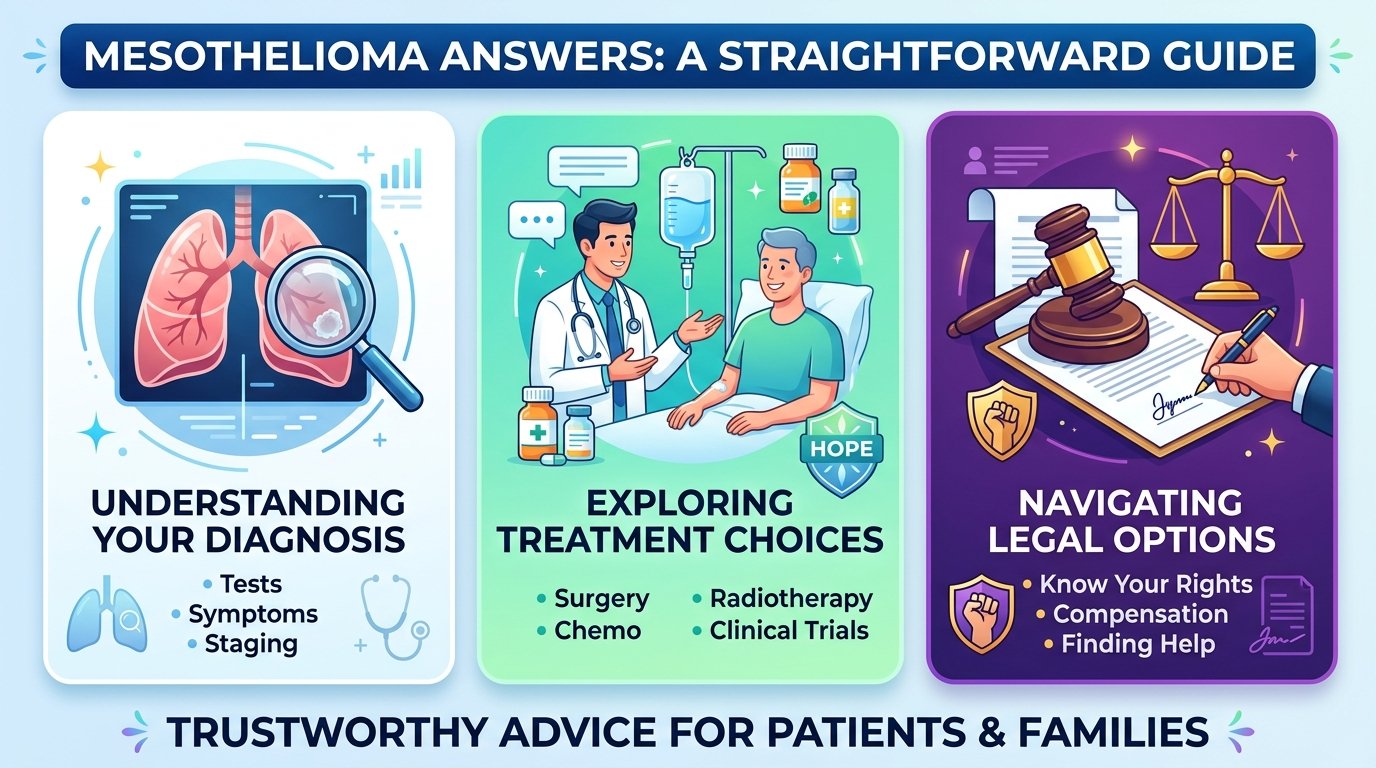
This guide is written for you. Simple language. Clear explanations. No medical jargon that you need a dictionary to understand. You will learn what mesothelioma is, what treatment options are available, how to find the best doctors, what your prognosis really means, and most importantly, how to get financial help to pay for everything.
Take a breath. Read one section at a time. You have got this.
What Is Mesothelioma in Simple Terms?
Let us start with the basics.
Your body has a thin layer of tissue that covers your internal organs. Think of it like shrink wrap around your lungs, your heart, and your stomach. This tissue is called the mesothelium. Its job is to protect your organs and help them move smoothly.
Mesothelioma is cancer of that protective tissue.
There are four types of mesothelioma. Which type you have depends on where the cancer started.
Pleural Mesothelioma
This is the most common type. About 75 out of 100 people with mesothelioma have this type. The cancer starts in the tissue around your lungs.
Symptoms include trouble breathing, chest pain, a cough that will not go away, and losing weight without trying.
Peritoneal Mesothelioma
This is the second most common type. About 20 out of 100 people with mesothelioma have this type. The cancer starts in the tissue around your belly.
Symptoms include belly pain, swelling in your stomach area, feeling sick to your stomach, throwing up, and losing weight without trying.
Pericardial Mesothelioma
This type is very rare. The cancer starts in the tissue around your heart.
Symptoms include chest pain, a racing heart, and trouble breathing.
Testicular Mesothelioma
This is the rarest type of all. The cancer starts in the tissue around the testicles.
The main symptom is a lump or swelling in the testicle.
For the rest of this guide, we will focus on pleural and peritoneal mesothelioma since they are the most common.

What Causes Mesothelioma?
Almost every single case of mesothelioma is caused by asbestos exposure. Asbestos is a mineral that was used in thousands of products for many years.
Why was asbestos so popular? Because it is strong, it does not burn, and it is cheap. Companies loved it. They used it in insulation, ceiling tiles, floor tiles, brake pads, shipbuilding materials, and military equipment.
But there was a deadly problem. When asbestos is disturbed, tiny fibers float into the air. You cannot see them. You cannot smell them. You breathe them in without knowing. Those fibers get stuck in your lungs or your stomach. Your body cannot break them down or get rid of them.
Over many years, sometimes twenty to fifty years, those fibers cause damage. They cause inflammation and scarring. Eventually, that damage can turn into cancer.
This long gap between exposure and diagnosis is why so many people are diagnosed later in life. You might have been exposed to asbestos decades ago and forgotten all about it.
Who Was Exposed?
If you have mesothelioma, you were almost certainly exposed to asbestos at some point. The most common exposures happened at work.
Shipyard workers: Asbestos was used everywhere in ships. Pipes, boilers, engines, insulation, and gaskets all contained asbestos. Workers who built, repaired, or maintained ships breathed it in every single day.
Construction workers: Asbestos was used in insulation, drywall, roofing, siding, flooring, and ceiling tiles. Anyone who cut, sanded, or took down these materials was exposed.
Factory and industrial workers: Power plants, oil refineries, chemical plants, and steel mills all used asbestos for insulation and fireproofing.
Military veterans: All branches of the military used asbestos. The Navy used the most because ships were full of asbestos. But Army, Air Force, and Marine Corps veterans were also exposed.
Plumbers, electricians, mechanics, and insulators: These workers handled asbestos-containing products every single day as part of their normal jobs.
Family members: This is heartbreaking. Family members were also exposed. Asbestos fibers stuck to work clothes. When workers came home, they brought those fibers with them. Wives who shook out work clothes inhaled asbestos. Children who hugged their fathers after work inhaled asbestos. This is called secondhand exposure.
If you have mesothelioma, you did nothing wrong. You were just doing your job or living your life. The companies that made and sold asbestos products knew it was dangerous. They had secret documents proving they knew. They hid the truth. They kept selling asbestos anyway. They are the ones at fault.
Recognizing the Signs
The symptoms of mesothelioma can be confusing. They can look like many other, less serious illnesses. That is why mesothelioma is often misdiagnosed at first.
Signs of Pleural Mesothelioma
- Shortness of breath that gets worse over time
- Pain in your chest or under your ribs
- A dry cough that will not go away
- Trouble swallowing
- Losing weight without trying
- Feeling very tired all the time
- Lumps under the skin on your chest
Signs of Peritoneal Mesothelioma
- Pain or swelling in your belly
- Feeling sick to your stomach
- Throwing up
- Not feeling hungry
- Losing weight without trying
- Diarrhea or constipation
- Lumps under the skin on your belly
If you have these symptoms and you know or think you were exposed to asbestos, tell your doctor. Do not let them tell you it is nothing. You have the right to be tested.

How Doctors Diagnose Mesothelioma
Getting the right diagnosis is the first step to getting the right treatment.
Imaging Scans
The first tests are usually scans. A chest X-ray can show fluid around your lungs or thickening of the tissue. A CT scan gives a much more detailed picture. It can show tumors and help doctors see if the cancer has spread.
Blood Tests
There is no blood test that can say for sure that you have mesothelioma. But there are blood tests that look for certain substances that are often high in people with mesothelioma. These tests can help doctors decide if a biopsy is needed.
Biopsy
A biopsy is the only way to know for sure if you have mesothelioma. A doctor takes a small piece of tissue from the suspicious area. A specialist looks at it under a microscope. If cancer cells are there, the specialist can tell what type of cancer it is and what type of mesothelioma cells you have.
Your Treatment Options
Mesothelioma treatment has come a long way. Patients today have more options and better results than ever before.
Surgery
Surgery tries to remove as much of the cancer as possible. For some patients, surgery can remove all of the cancer.
For pleural mesothelioma: There are two main surgeries. One surgery removes the affected lung, the tissue around the lung, part of the muscle that helps you breathe, and part of the lining of the heart. This is a big surgery. Recovery takes a long time. The other surgery removes the tissue around the lung but leaves the lung. Recovery is easier.
For peritoneal mesothelioma: A surgeon removes all visible tumors from your belly. This is often followed by a special treatment called HIPEC.
Chemotherapy
Chemotherapy uses strong drugs to kill cancer cells. The drugs travel through your whole body. They can reach cancer cells that have spread.
The standard chemotherapy for mesothelioma is two drugs given together. Many patients get chemotherapy before surgery to shrink the tumor, or after surgery to kill any remaining cancer cells.
Chemotherapy is given through a needle in your arm. You get treatment for a few days, then rest for a few weeks, then repeat.
Side effects can include feeling very tired, nausea, hair loss, and getting sick more easily. But there are good medications that help with most side effects.
Radiation
Radiation uses high-energy rays to kill cancer cells. Unlike chemotherapy, radiation is aimed at one specific area.
Radiation is often used after surgery to kill any tiny pieces of cancer that might have been left behind. It can also be used to shrink tumors that are causing pain or trouble breathing.
Radiation treatments are quick and painless. You lie on a table while a machine moves around you. Each session takes about fifteen minutes.
Immunotherapy
Immunotherapy is a newer type of treatment. Instead of attacking the cancer directly, immunotherapy helps your own immune system fight the cancer.
The FDA has approved immunotherapy drugs for mesothelioma. They are given through a needle in your arm every few weeks.
Immunotherapy does not work for everyone. But for some patients, it has helped them live much longer.
HIPEC for Peritoneal Mesothelioma
HIPEC is a special treatment for peritoneal mesothelioma. First, a surgeon removes all visible tumors from your belly. Then, heated chemotherapy is pumped directly into your belly for about ninety minutes. The heat helps the medicine work better. Then the medicine is drained out, and the surgeon closes the incision.
HIPEC has helped many patients with peritoneal mesothelioma live much longer.
Understanding Your Prognosis
Your mesothelioma prognosis is your expected outcome. This is one of the first things patients want to know. How long do I have to live?
Here is the honest truth. No one can tell you exactly how long you will live. Statistics can tell you what happened to groups of people in the past. They cannot tell you what will happen to you.
Here are the things that affect your prognosis.
Cell type: Epithelioid mesothelioma has the best prognosis. Sarcomatoid has a worse prognosis. Biphasic is in between.
Stage: Early stage mesothelioma has a better prognosis than late stage. That is why early diagnosis is so important.
Your overall health: Younger, healthier patients do better than older, sicker patients.
Treatment: Patients who can have surgery, chemotherapy, and radiation do better.
The average life expectancy for mesothelioma is about 12 to 21 months. But that is just an average. That means half of people live longer than that. Some people live five years. Some live ten years. Some live even longer. Do not let the statistics steal your hope.
Finding the Best Doctors
You need doctors who specialize in mesothelioma. This is not a cancer that general oncologists see very often. You want a team that treats mesothelioma patients every single day.
Some of the best mesothelioma treatment centers in the United States are:
- MD Anderson Cancer Center in Houston, Texas
- Brigham and Women’s Hospital in Boston, Massachusetts
- Memorial Sloan Kettering Cancer Center in New York
- Mayo Clinic in Rochester, Minnesota
- UCLA Medical Center in Los Angeles, California
Do not worry if you do not live near these centers. Many offer telehealth visits. You can send your medical records to a specialist. They can review your case and recommend a treatment plan.
Your Legal Rights
Here is something every mesothelioma patient needs to know. You may be entitled to a lot of money.
Companies that made and sold asbestos products knew about the dangers. They had secret documents proving they knew. They hid those documents. They kept selling asbestos. They did not warn workers or the public.
That is wrong. That is against the law. And the law says they must pay for the harm they caused.
Types of Money You Can Get
Lawsuits: You can sue the companies that exposed you to asbestos. Most mesothelioma lawsuits settle out of court. The average mesothelioma settlement is between one million and two million dollars.
Asbestos bankruptcy trusts: Many asbestos companies went bankrupt because of all the lawsuits. When they went bankrupt, they had to set aside money in trust funds for victims. There are over sixty of these trusts. They hold more than thirty billion dollars.
VA benefits: If you are a veteran, you may be eligible for monthly disability payments and free health care from the VA.
Workers’ compensation: If you were exposed at work, you might be able to file a workers’ compensation claim. But these payments are usually much smaller than what you can get from a lawsuit or trust fund.
Finding the Best Mesothelioma Lawyer
You need a lawyer who only does asbestos cases. Do not hire a general lawyer. Mesothelioma cases are complicated. You need someone who does this work every day.
The best mesothelioma lawyer will:
- Give you a free consultation
- Work on contingency (you pay nothing upfront)
- Have handled hundreds or thousands of mesothelioma cases
- Have a history of large settlements and verdicts
- Come to you (they will travel to your home or hospital)
Do not worry about finding a lawyer in your city. Mesothelioma lawyers work with clients all over the country. They can handle everything by phone, mail, and email.
How Much Does a Lawyer Cost?
Nothing upfront. Mesothelioma lawyers work on contingency. That means they take a percentage of the money they win for you. If they do not win anything, you pay nothing.
You have nothing to lose and potentially millions of dollars to gain.
How Long Do You Have to File a Claim?
Every state has a deadline for filing a lawsuit. This is called the statute of limitations. The deadline is usually one to four years from the date you were diagnosed.
If you miss the deadline, you lose your right to get money forever. That is why you need to call a lawyer as soon as possible. Do not wait.
What If Your Loved One Already Passed Away?
You can still file a claim. This is called a wrongful death claim. The money goes to the spouse, children, or other family members. Do not wait. There are deadlines for these claims too.
Clinical Trials: New Treatments Being Tested
Clinical trials are research studies that test new treatments. They offer access to treatments that are not yet available to everyone.
For mesothelioma patients who have not gotten better with standard treatments, clinical trials can be a great option. New immunotherapy drugs, new drug combinations, and new treatments are being tested all the time.
To find clinical trials, ask your doctor. You can also search online at clinicaltrials.gov.
Living with Mesothelioma
Treatment is hard. Here are some ways to take care of yourself.
Rest when you need to. Your body is working hard to fight cancer.
Eat as well as you can. Ask to speak with a nutritionist. They can give you ideas for getting enough to eat even when you do not feel hungry.
Stay as active as you can. Gentle exercise like walking can help you maintain your strength.
Ask for help. Friends and family want to help. Tell them what you need. A ride to treatment. Help with groceries. Someone to watch the kids.
Talk about how you feel. It is normal to feel sad, angry, scared, or numb. Talk to a counselor, a trusted friend, or a support group.
Frequently Asked Questions
How long do I have to file a lawsuit?
Every state has a deadline. Call a lawyer as soon as possible.
What if I do not know where or when I was exposed to asbestos?
Your lawyer can help figure it out. They will ask you about every job you ever had and every place you ever lived.
What is the average mesothelioma settlement?
Most cases settle for between one million and two million dollars.
Can I afford a lawyer?
Yes. Mesothelioma lawyers work on contingency. You pay nothing upfront.
What if I am too sick to travel?
Lawyers will come to you. Many will meet you in your home or even in your hospital room.
Hope for the Future
A mesothelioma diagnosis is serious. There is no point pretending otherwise. But the future is brighter than it used to be.
New treatments are being developed all the time. Immunotherapy is helping some patients live longer. Researchers are working on new drugs, new surgical techniques, and new ways to detect mesothelioma earlier.
You have reason to hope.
But hope is not enough. You need to take action. Call a mesothelioma specialist today. Call a mesothelioma lawyer today. Get the treatment you need. Get the money you deserve.
You are not alone. There are doctors, lawyers, support groups, and other patients ready to help you. Reach out. Make the call. Take the first step.
Disclaimer: This article provides general information about mesothelioma, treatment options, and legal rights. It does not constitute medical advice or legal advice. Every case is different. Always consult with qualified medical professionals and attorneys about your specific situation. If you or a loved one has been diagnosed with mesothelioma, speak with a doctor immediately and contact a qualified mesothelioma lawyer to understand your legal rights.