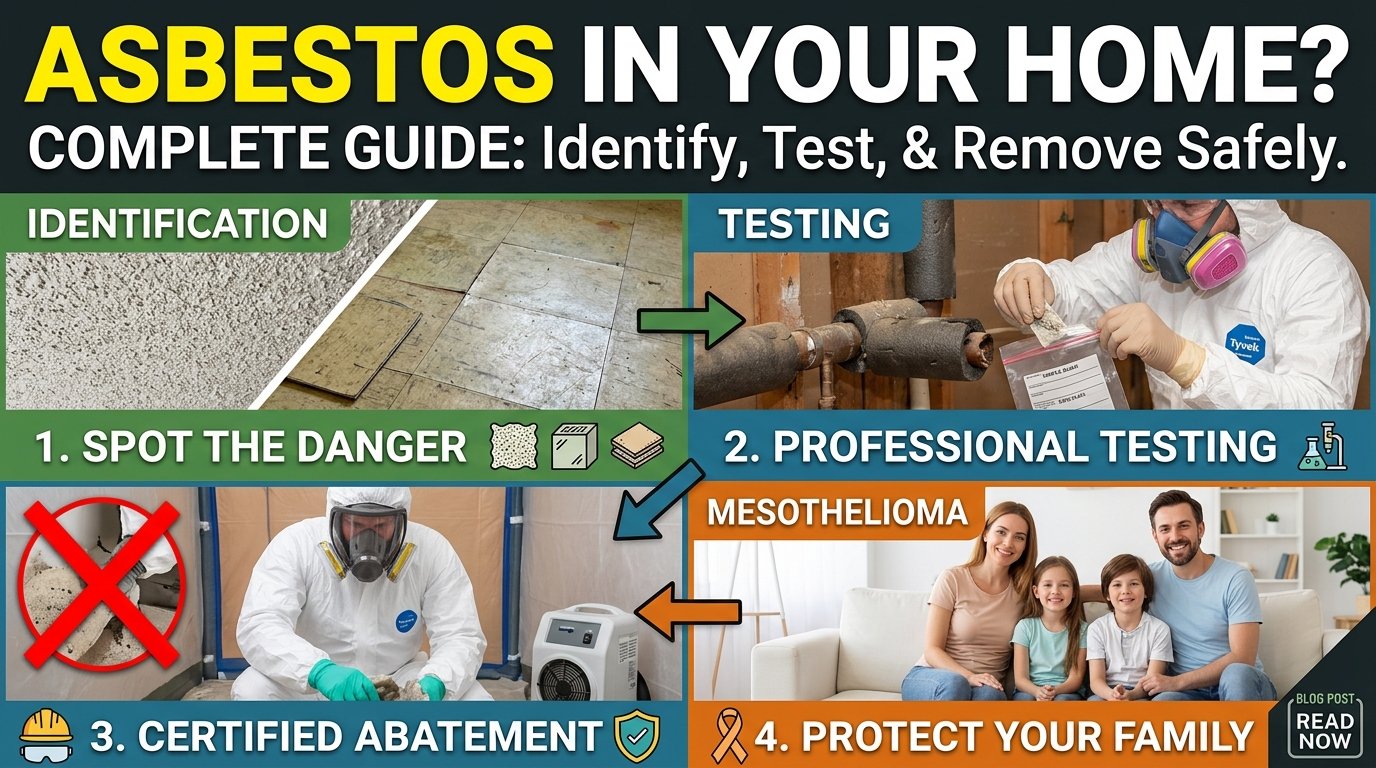
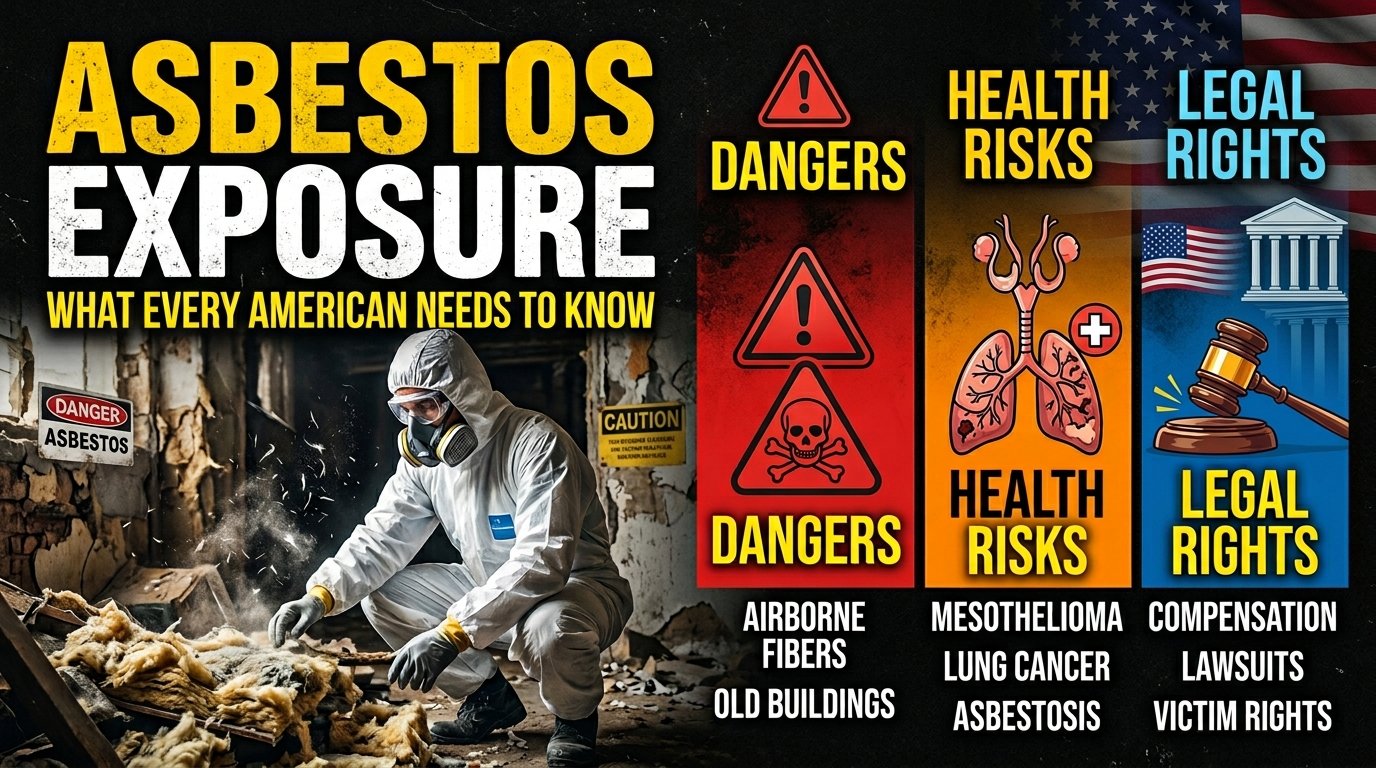
Where asbestos hides — in older homes, workplaces, military service, and consumer products — how to identify it, how to assess your risk, and how to handle removal safely.
Asbestos exposure is regulated in the United States by both OSHA for workplace exposure and EPA for environmental and consumer exposure. The legal limits, monitoring requirements, and enforcement standards have evolved over decades. Understanding the current standards helps workers and the public know what exposure is permitted and how to document violations.
This guide explains OSHA and EPA asbestos exposure limits in plain language. You will learn about permissible exposure limits, excursion limits, action levels, and how the standards apply across different settings.
OSHA and EPA standards regulate workplace and environmental asbestos exposure.
OSHA Permissible Exposure Limit
The OSHA permissible exposure limit, abbreviated PEL, for asbestos is 0.1 fibres per cubic centimetre of air, calculated as an eight-hour time-weighted average. This is the maximum airborne asbestos concentration that workers can legally be exposed to during a typical workday. The PEL has been progressively reduced over decades as evidence about asbestos health effects accumulated.
The PEL applies to all workplaces where workers may be exposed to asbestos. Construction sites, manufacturing facilities, automotive shops, and other settings must meet the standard. Employers are responsible for monitoring, control, and worker training when asbestos is present.
OSHA Excursion Limit
In addition to the eight-hour PEL, OSHA has a thirty-minute excursion limit of 1.0 fibre per cubic centimetre. Workers cannot be exposed to higher than 1.0 f/cc averaged over any thirty-minute period during the workday, even if the eight-hour average remains below the PEL. The excursion limit prevents acute high exposures during specific tasks.
Both limits are well below historical workplace concentrations. Many trades from the asbestos era saw exposure levels orders of magnitude higher than current limits. The reduction over decades has substantially decreased the asbestos disease burden expected from current exposures, though the latency means current cases reflect historical levels.
Air monitoring verifies compliance with PEL and excursion limits.
Action Level and Monitoring Triggers
The OSHA action level is 0.1 fibres per cubic centimetre, the same as the PEL but applied as a trigger for additional employer requirements. When exposures meet or exceed the action level, employers must provide regulated areas, exposure monitoring, medical surveillance, and respiratory protection programmes for affected workers.
Air monitoring under the OSHA standard requires personal breathing zone samples representative of worker exposure. The samples are analysed at accredited laboratories. Monitoring frequency depends on whether exposures consistently fall below or near the action level.
EPA Standards for Buildings and the Environment
EPA regulates asbestos in buildings, schools, and the broader environment. The asbestos NESHAP regulations establish requirements for renovation and demolition activities involving asbestos materials. AHERA addresses asbestos in schools. The Toxic Substances Control Act has produced specific bans on certain asbestos products.
Air clearance after asbestos abatement uses a specific EPA-recommended limit, typically below 0.01 fibres per cubic centimetre by transmission electron microscopy. This is much lower than the OSHA workplace standard because re-occupancy by general public including children warrants stricter standards than occupational exposure of adult workers.
Recent Regulatory Developments
The EPA’s recent ban on chrysotile asbestos, finalised in 2024, prohibits the manufacture, processing, and distribution of chrysotile asbestos and chrysotile asbestos-containing products. The ban phases out remaining chrysotile uses over several years. The action represents a significant tightening of US asbestos regulation after decades of incomplete bans.
The continued evaluation of other asbestos forms and legacy uses is ongoing. The regulatory landscape in 2030 may look different from today as the EPA continues its risk evaluations under TSCA.
Closing Note
OSHA and EPA standards establish the regulatory framework for asbestos exposure in the United States. The standards have tightened substantially over decades and continue to evolve. Current workplace and environmental exposures should be much lower than historical levels, although enforcement varies and violations occur.
If you believe your workplace has asbestos exposure exceeding OSHA limits, you can file a complaint with OSHA. If you believe an environmental asbestos situation violates EPA regulations, you can file a complaint with EPA. Both agencies investigate complaints and have enforcement authority.
This article is for educational purposes only. For specific compliance questions, consult OSHA, EPA, or qualified industrial hygiene professionals.
Asbestos was used widely in school construction from the 1940s through the 1970s. Many older school buildings still contain asbestos-containing materials. The 1986 federal AHERA law requires schools to inspect, manage, and notify families about asbestos. Knowing the rules helps parents understand the risks and the protections in place.
This guide explains asbestos in schools in plain language. You will learn what AHERA requires, what asbestos materials are typically present, what risk levels are involved, and what parents can do to access school inspection records.
School buildings constructed before 1980 may contain asbestos materials.
What AHERA Requires
The Asbestos Hazard Emergency Response Act, often abbreviated AHERA, was passed in 1986. It requires public and private nonprofit schools serving kindergarten through twelfth grade to inspect their buildings for asbestos-containing materials, develop management plans, conduct periodic surveillance, and notify parents and staff annually about asbestos activities.
The management plans must be available to parents on request. The plans describe where asbestos-containing materials are located in the school, what condition they are in, and what response actions are being taken. Reviewing the management plan is the most direct way for parents to understand the situation in their child’s school.
Where Asbestos Is Typically Found
Common school asbestos-containing materials include floor tiles and adhesives, ceiling tiles, pipe insulation, boiler insulation, sprayed-on fireproofing on structural beams, exterior siding on older buildings, roofing materials, and laboratory countertops. Vinyl asbestos floor tiles in 9-inch by 9-inch sizes are particularly common in pre-1980 construction.
Most asbestos-containing materials in good condition do not pose immediate exposure risk. The danger arises when materials are damaged, deteriorating, or being disturbed by renovation or maintenance. The management plan describes the condition assessment and the response actions taken.
Proper labelling and air monitoring are required during abatement activities.
Risk Assessment for Students and Staff
The actual exposure risk to students and staff in a properly managed school is generally low. Modern AHERA-compliant management has substantially reduced exposure compared to earlier decades. Air monitoring during normal school operations typically shows asbestos fibre concentrations below detection limits or at levels comparable to background outdoor air.
Risk increases when asbestos materials are disturbed without proper containment. Renovation work, water damage repair, or vandalism that breaks ceiling tiles can release fibres into the air. Schools are required to manage these situations carefully, with proper abatement contractors and air clearance testing before students return.
What Parents Can Do
Parents can request the school’s AHERA management plan from the school district or the building principal. The plan must be made available within five business days under federal law. Reviewing the plan reveals the locations of asbestos-containing materials, the condition assessments, and the response actions.
Parents can also request the annual notification that schools are required to send to families and staff. The notification describes asbestos activities during the past year. Schools that do not comply with notification requirements can be reported to the state education department or the EPA.
When Renovation Is Planned
If your school district is planning renovation or demolition work involving asbestos-containing materials, ask about the abatement plan. Reputable abatement involves licensed contractors, sealed containment of work areas, negative air pressure ventilation, daily air monitoring, and clearance testing before students return to affected areas.
Work performed during summer break or other times when students are not present is generally preferred. Schools that do abatement during the school year with students in nearby areas should explain the containment and monitoring approach in detail. Parents have a right to ask.
Closing Note
Asbestos in schools is a managed risk rather than an emergency in most cases. AHERA provides a framework for inspection, management, and parent notification that has substantially reduced the historical exposure problem. Engaging with the management plan and notification process is the right level of involvement for most parents.
If your school’s management plan reveals significant deterioration, planned abatement, or other concerning information, ask questions and request action. Children spend many hours in school buildings; the air quality and safety standards matter.
This article is for educational purposes only. For specific concerns about your school, contact the school district, the state education department, or the EPA’s regional office.
Certain industries had heavy asbestos exposure during the twentieth century. The workers in those industries make up the largest share of mesothelioma cases today. Knowing which industries are most associated with asbestos disease helps current and former workers understand their risk and recognise the connection if disease develops.
This guide explains asbestos exposure by industry in plain language. You will learn the historical occupational asbestos hot spots, what specific roles within each industry had the highest exposure, and how exposure documentation supports modern compensation claims.
Industries with heavy asbestos use included shipbuilding, construction, manufacturing, and power generation.
Shipbuilding and Maritime Trades
Shipbuilding may be the single largest source of occupational asbestos exposure in the United States. Asbestos was used extensively in ship construction for insulation, gaskets, valves, and brakes. Workers in shipyards, both naval and commercial, had heavy exposure during ship construction, repair, and overhaul. The decades from World War II through the 1970s saw the heaviest exposures.
High-exposure roles included pipefitters, insulators, boilermakers, machinists, sheet metal workers, painters, and electricians. The enclosed spaces aboard ships concentrated airborne fibres. Workers often left shifts covered in asbestos dust. Family members were also exposed when workers brought asbestos home on their clothing.
Construction Trades
Construction workers across many trades had asbestos exposure. Insulation workers handled asbestos-containing pipe wrap, boiler insulation, and sprayed fireproofing. Drywall workers handled asbestos-containing joint compound. Floor and ceiling installers handled asbestos-containing tiles and adhesives. Roofers handled asbestos-containing felt and shingles.
The construction industry continues to be a source of exposure during demolition and renovation of older buildings. Modern abatement standards reduce but do not eliminate the exposure. Construction workers in renovation today may have lower exposure than their predecessors but can still develop disease decades after exposure.
Industrial workers across many sectors encountered asbestos in routine activities.
Power Generation and Manufacturing
Power plants used extensive asbestos for boiler insulation, turbine components, and gaskets. Workers in coal, oil, and nuclear power facilities had ongoing exposure during operations and especially during outages and overhauls. Boilermakers, insulators, pipefitters, and operators had specific exposure patterns.
Manufacturing industries that used asbestos in products or processes include automotive (brake and clutch manufacturing), textile (asbestos cloth weaving), cement and roofing products, gasket manufacturing, and many others. Workers at these facilities had direct production exposure plus ambient exposure throughout the plants.
Automotive Repair
Automotive mechanics had specific exposure to asbestos in brake pads, clutch linings, and gasket materials. Brake work generated airborne dust during pad replacement. Clutch and gasket work involved removing and replacing asbestos components. Independent garage mechanics, dealership service technicians, and fleet maintenance workers all had exposure.
Modern automotive parts have largely eliminated asbestos in US-manufactured products, though imported brake parts and older vehicles still contain it. Mechanics working on older vehicles or using imported parts may still have exposure today.
Other Significant Industries
Steel mills, oil refineries, chemical plants, paper mills, and railway maintenance all involved significant asbestos use. Workers in these settings had occupational exposure even when not directly handling asbestos products, due to the ubiquitous use of asbestos insulation and gaskets in industrial equipment.
Firefighters had exposure during structure fires that disturbed asbestos materials. School district maintenance workers had exposure during routine repairs in older buildings. Many other occupations had situational exposure without being primarily classified as asbestos trades.
Documentation for Modern Claims
For mesothelioma patients pursuing compensation, occupational history documentation is essential. Employment records, union records, military service records, and witness statements from coworkers all support claims. Specialty mesothelioma firms have research teams that reconstruct exposure histories using these and other resources.
Workers should preserve records of their employment history. Even decades-old records can help establish exposure for compensation purposes. Family members can sometimes find records that the patient does not remember.
Closing Note
The industries listed above account for the majority of US mesothelioma cases. If you worked in any of these settings, particularly during the 1940s through 1980s, your risk for asbestos-related disease is elevated. Routine medical surveillance and prompt evaluation of any chest or abdominal symptoms is worth the small investment.
If you receive a mesothelioma diagnosis, your work history is the foundation of compensation claims. Document your employment history as completely as you can and share it with both your medical team and any legal team you engage.
This article is for educational purposes only. For specific medical or legal concerns, consult qualified professionals.
Mesothelioma is sometimes diagnosed in family members of asbestos workers who never worked with asbestos themselves. The pathway is secondhand exposure, also called take-home asbestos exposure. Understanding how this happens helps explain unexpected diagnoses and supports compensation claims for affected family members.
This guide explains secondhand asbestos exposure in plain language. You will learn how the exposure happens, who is at risk, what the legal landscape looks like for affected families, and what records help support claims.
Spouses and children of asbestos workers can develop mesothelioma from take-home fibres.
How Take-Home Exposure Occurs
Workers in asbestos trades historically left worksites with asbestos fibres on their skin, hair, work clothes, and shoes. The fibres travelled home with them. They contaminated cars during the commute, household laundry rooms during washing of work clothes, and home environments during day-to-day activities.
Family members who shook out work clothes before laundering, who hugged the worker after their shift, who rode in cars with asbestos fibres on the seats, or who simply lived in homes where asbestos accumulated had ongoing exposure. The exposure was not as concentrated as the worker’s primary exposure but extended over years and could produce mesothelioma decades later.
Who Is at Risk
Spouses of asbestos workers, particularly those who handled the worker’s laundry, are at the highest risk for take-home mesothelioma. Children who played near work clothes, who hugged returning fathers, or who lived in homes during years of contamination have elevated risk. Even adult children visiting home periodically had some exposure.
The exposure pattern explains why mesothelioma sometimes appears in patients whose only connection to asbestos was a family member’s job. The pattern is documented and recognised by the legal and medical communities.
Take-home exposure has resulted in mesothelioma diagnoses across generations.
Compensation Pathways for Take-Home Cases
Take-home exposure cases can pursue compensation against the same employers and product manufacturers responsible for the original worker’s exposure. The legal theory is that companies who knew or should have known about take-home risks failed to warn workers, failed to provide laundry facilities at work, or failed to take other reasonable steps to prevent the spread of asbestos to families.
Courts have generally accepted take-home exposure liability when sufficient evidence supports the claim. The evidence includes documentation of the worker’s employment, the asbestos products used, and the family member’s exposure to the worker’s contaminated clothing and home environment.
Documenting a Take-Home Case
Documentation includes the worker’s employment history, the specific asbestos products they handled, the family member’s living arrangements during the relevant years, and any specific activities that produced contact with the worker’s contaminated clothing or environment. Witness statements from family members, neighbours, or others who observed the household routines support the claim.
Specialty firms experienced in take-home cases handle the documentation. The cases are more complex than primary occupational exposure but have produced successful settlements and verdicts for many affected families.
Closing Note
If you have been diagnosed with mesothelioma and a family member worked in asbestos trades, the take-home exposure pathway likely applies to your case. Compensation pathways exist. Specialty firms can pursue claims against the employers and manufacturers responsible for the asbestos exposure that ultimately caused your disease.
This article is informational and does not constitute legal advice. Consult qualified counsel for guidance specific to your case.
Talcum powder cases involving asbestos contamination have produced major litigation in recent years. Johnson and Johnson and other manufacturers have faced thousands of claims alleging that their talc products contained asbestos and caused mesothelioma and ovarian cancer. The legal and scientific landscape continues to evolve.
This guide explains asbestos in talcum powder cases in plain language. You will learn how talc and asbestos can co-occur, what the legal landscape looks like, and what consumers can do if they used talc products and have been diagnosed with cancer.
Talc-asbestos litigation has produced major settlements and verdicts in recent years.
How Talc and Asbestos Co-Occur
Talc and asbestos are natural minerals that often occur together in the earth. Talc is mined from deposits that can be near asbestos-bearing rock. Without careful sourcing and testing, talc products can contain trace amounts of asbestos fibres. Some talc deposits are essentially free of asbestos, while others have significant contamination.
The historical talc industry varied in its testing and disclosure practices. Some manufacturers tested rigorously and used only certified asbestos-free talc. Others used less reliable testing or sourced from mines where contamination was more likely. Internal documents from major talc litigation have shown awareness of the contamination risk in some companies decades before public disclosure.
The Johnson and Johnson Cases
Johnson and Johnson talcum powder cases have produced thousands of mesothelioma and ovarian cancer claims. Some cases have resulted in major verdicts. The company has pursued various settlement and bankruptcy strategies to manage the litigation. The status of resolution mechanisms continues to evolve through court proceedings.
Affected consumers should consult specialty mesothelioma firms about current case opportunities. The procedural mechanisms for filing and resolving talc cases vary depending on bankruptcy status and other ongoing legal developments. Specialty counsel stays current on the changing landscape.
Talc product testing and disclosure standards have evolved through litigation.
What Consumers Can Do
If you have been diagnosed with mesothelioma or ovarian cancer and have a history of talcum powder use, document your usage history. Note the product brands, the approximate years and frequency of use, and any specific applications. The documentation supports compensation claims.
Consult a specialty mesothelioma firm familiar with talc litigation. The cases are technical and the procedural landscape complex. Firms that have handled many talc cases know the current mechanisms for filing and resolution.
Closing Note
Asbestos contamination in talcum powder has been a significant source of mesothelioma cases in recent years. The compensation pathways exist but require specialty legal expertise. Consumers diagnosed with relevant cancers should consult specialty counsel to understand their options.
This article is informational and does not constitute legal advice. Consult qualified counsel for guidance specific to your case.
You bought an older home. The inspector noted possible asbestos in the basement insulation, the floor tiles, or the siding. You need it removed safely. Hiring the right contractor protects your family and avoids creating a worse problem than you started with.
This guide explains how to hire an asbestos removal contractor in plain language. You will learn what licensing requirements apply, what questions to ask, what the work involves, and what red flags to watch for.
Asbestos removal requires licensed contractors with specific training and equipment.
Licensing Requirements
Asbestos abatement contractors must be licensed by your state. Each state has specific requirements for company licensing, individual worker certification, and project notifications. Verify the contractor’s current licensing through your state environmental department or labour department before signing a contract.
The OSHA training certificates for individual workers should be current. Asbestos abatement requires completion of specific 32-hour or 40-hour training programmes plus annual refresher training. Workers performing the abatement should have current certificates available for inspection.
Questions to Ask
Ask the contractor for proof of state licensing, individual worker certifications, general liability and pollution liability insurance, and workers’ compensation coverage. Ask for references from recent residential projects similar to yours. Ask for a written work plan describing the containment, ventilation, monitoring, and disposal approach.
Ask about air clearance testing. Reputable contractors arrange independent air sampling at the end of the job to verify that asbestos fibre concentrations are below federal action levels. Without clearance testing, there is no way to know whether the work was completed safely.
Air clearance testing verifies safe re-occupancy after abatement.
What the Work Involves
Proper asbestos abatement involves containment of the work area with plastic sheeting and tape, negative air pressure ventilation that prevents fibre escape, wet methods that suppress airborne dust during removal, personal protective equipment for workers, double-bagging of asbestos waste, and disposal at licensed facilities.
Family members must vacate the work area during abatement. Children, pets, and any people with respiratory conditions should leave the home for the duration. Re-occupancy occurs only after air clearance testing confirms safe levels.
Red Flags to Watch For
Avoid contractors who quote dramatically lower prices than competitors. Asbestos abatement is labour-intensive and properly equipped. Lowball pricing usually means corners are being cut. Avoid contractors who cannot produce current licensing documentation or who pressure you to start work before paperwork is complete. Avoid contractors who do not include air clearance testing in their proposal.
Avoid any contractor who suggests removing asbestos materials yourself with their guidance. Asbestos abatement is regulated work that requires licensed professionals. Self-removal violates federal and state law and creates significant exposure risk.
Closing Note
The right asbestos abatement contractor protects your home and family. The wrong one creates a worse exposure than the original problem. Take the time to vet contractors carefully. Verify licensing. Require air clearance testing. Demand a written work plan with containment specifications.
This article is for educational purposes only. For specific contractors and current state regulations, contact your state environmental or labour department.
You suspect asbestos in your home. The next step is testing. The question is whether to use a DIY sample kit from a hardware store or to hire a certified inspector. Both have a role. Knowing when to use which saves time and money while producing reliable results.
This guide explains asbestos testing in your home in plain language. You will learn how DIY sample kits work, when to use a certified inspector instead, what laboratory analysis costs, and what the results actually tell you.
Asbestos testing identifies materials and condition for management decisions.
DIY Sample Kits
DIY asbestos sample kits include sample bags, instructions, and a pre-paid mailing envelope to send samples to an accredited laboratory for analysis. The cost is typically thirty to sixty dollars per kit including the lab analysis. Hardware stores and online retailers sell them.
The kits work for simple situations where the homeowner can identify a specific material to test. Common uses include testing a piece of floor tile, a section of pipe insulation, or a chunk of ceiling material. The homeowner takes the sample, packages it according to the kit instructions, and mails it to the lab. Results come back within a week or two.
The risks of DIY sampling are dust generation during the sample collection. Spraying the material with water before sampling, using gloves and a mask, and limiting the sample to a small piece reduce the risk. Following the kit instructions exactly matters.
Certified Inspectors
Certified asbestos inspectors are trained professionals licensed by the state. They perform a comprehensive home assessment, identify suspect materials, take samples safely, and provide a written report describing the findings, the condition of materials, and recommendations for management or removal.
Inspector services cost three hundred to one thousand dollars depending on the size of the home and the scope of inspection. The cost is higher than DIY but provides expertise, comprehensive coverage, and a professional report that supports management decisions and any contractor work.
Accredited labs use polarised light microscopy or transmission electron microscopy.
When to Use Which Approach
DIY kits make sense for testing one or two specific materials in a home you have lived in for years and where there is no plan for major renovation. The lower cost is appropriate to the simpler situation.
Certified inspectors are appropriate when buying or selling a home, planning significant renovation, dealing with damaged materials, or when multiple suspect materials need assessment. The professional report is also helpful for insurance claims and contractor coordination.
Laboratory Analysis Methods
Asbestos labs typically use polarised light microscopy as the primary analysis method. The technique identifies the type of asbestos, estimates the percentage of asbestos in the sample, and notes any other fibrous materials present. Results are expressed as percentage of asbestos fibres in the bulk material.
Transmission electron microscopy is a more sensitive method used in specific situations. It identifies smaller fibres than light microscopy can detect. TEM is more expensive and is typically reserved for samples where higher sensitivity is needed.
Interpreting Results
Results below one percent are generally considered non-asbestos containing for regulatory purposes. Results above one percent classify the material as asbestos-containing and trigger management requirements. The specific percentage and asbestos type inform decisions about whether to leave materials in place, encapsulate them, or remove them.
Asbestos-containing materials in good condition often do not require immediate action. Damaged, deteriorating, or about-to-be-disturbed materials warrant removal or encapsulation by a licensed abatement contractor. The inspector or laboratory report should describe the recommendations.
Closing Note
Asbestos testing produces real, actionable information about your home. DIY kits work for simple situations. Certified inspectors are appropriate when the situation is more complex. Both pathways produce results that allow informed decisions about whether and how to address asbestos materials in your home.
This article is for educational purposes only. For specific guidance about your home, contact a certified asbestos inspector or your state environmental department.
Older vehicles and many imported automotive parts contain asbestos. Brake pads, clutch facings, gaskets, and other friction or sealing components historically used asbestos for heat resistance. Mechanics who service older vehicles or use imported parts may still have asbestos exposure today.
This guide explains asbestos in older vehicles in plain language. You will learn which automotive components contain asbestos, what exposure happens during service work, what protection is required, and how affected mechanics can document exposure for compensation purposes.
Brake and clutch service in older vehicles can release asbestos fibres.
Vehicle Components That May Contain Asbestos
Brake pads and shoes manufactured before 1980 commonly contained asbestos. Some brake parts manufactured well into the 1990s in the United States and even later in imported parts continued to use asbestos. Clutch facings followed a similar pattern. Gaskets in engines, transmissions, and exhaust systems often used asbestos for heat resistance. Heat shields and insulation around exhaust components sometimes contained asbestos.
Identifying which specific parts contain asbestos requires knowing the manufacturing date and the manufacturer. Original equipment from older vehicles is more likely to contain asbestos than current replacement parts. Imported parts from countries with less restrictive regulations are still a concern in current automotive work.
Exposure During Service Work
Brake work generates significant airborne dust during pad replacement and brake assembly cleaning. Compressed air to blow dust off components is a particularly high-exposure activity. Clutch replacement requires breaking apart asbestos-containing facings to remove them. Gasket removal often involves scraping that releases fibres.
The exposure can extend to mechanics not directly performing the work. Co-workers in the same shop, customers in the waiting area, and family members exposed to take-home contamination all share the exposure pathway.
Wet methods and HEPA vacuums replace compressed air for safe brake service.
Protection Standards
OSHA standards for automotive brake and clutch service require wet methods, HEPA vacuum equipment, and respiratory protection. Compressed air is prohibited for cleaning brakes and clutches. Specific containment systems are designed for brake service that capture asbestos dust at the source.
Compliance varies across the automotive industry. Larger dealerships and chain repair facilities generally follow OSHA standards more rigorously. Smaller independent shops have variable compliance. Workers in non-compliant facilities have continued ongoing exposure.
Documenting Mechanic Exposure
For mechanics diagnosed with mesothelioma, exposure documentation includes employment history at automotive shops, types of work performed, brake and clutch service activities, and information about the specific parts and brands handled. Witness statements from co-workers about specific products and practices support claims.
Specialty mesothelioma firms research the asbestos product history. Many brake and clutch manufacturers have established trust funds following bankruptcy. Mechanics often qualify for claims against multiple trusts based on the variety of parts they handled over their careers.
Closing Note
Asbestos in older vehicles continues to produce mesothelioma cases. Mechanics, body shop workers, and even DIY auto enthusiasts who serviced older vehicles have potential exposure. The latency period means cases continue to appear from work performed decades ago.
Current mechanics should follow OSHA standards rigorously. Diagnosed patients should consult specialty mesothelioma firms about their work history and the products they handled.
This article is for educational purposes only. For specific exposure questions, consult a qualified industrial hygienist or specialty attorney.
You love your home. It is where your family gathers for holidays. It is where your children take their first steps. It is where you feel safe.
But there could be something hidden in your walls, floors, ceilings, and pipes. Something you cannot see. Something you cannot smell. Something that could cause a deadly cancer decades from now.
That something is asbestos.
Asbestos was used in thousands of building materials before the 1980s. If your home was built before 1980, there is a very good chance it contains asbestos somewhere. That asbestos is not dangerous as long as it is undisturbed. But when you remodel, renovate, or simply live in an aging home, those fibers can become airborne. You breathe them in. They get stuck in your lungs. Decades later, you or someone you love could develop mesothelioma.
This guide is for homeowners, renters, landlords, and contractors. You will learn what asbestos is, where it is found in homes, how to tell if you have asbestos, how to test for it safely, how much removal costs, how to find a qualified abatement contractor, and most importantly, how to protect your family from exposure.
No complicated science. No scare tactics. Just clear, honest information to help you keep your family safe.
What Is Asbestos and Why Is It Dangerous?
Let us start with the simple explanation.
Asbestos is a group of minerals that occur naturally in the environment. Unlike other minerals that form solid rocks, asbestos forms into long, thin fibers. These fibers are incredibly strong. They are resistant to heat, fire, and chemicals.
For thousands of years, people knew asbestos was useful. But it was in the late 1800s that companies started using it on a massive scale. They put asbestos in thousands of products. Why? Because it was cheap, it worked, and it made products safer from fire.
But there was a deadly problem. When asbestos products are disturbed, the tiny fibers break loose and float into the air. You cannot see them. You cannot smell them. You do not know you are breathing them in.
Those fibers get stuck in your lungs. Your body cannot break them down. Your body cannot get rid of them. They sit there for years, causing inflammation and scarring. Over time, that damage can lead to mesothelioma, lung cancer, or asbestosis.
There is no known safe level of asbestos exposure. Even small amounts can cause disease decades later.
Older home interior.
Where Is Asbestos Found in Homes?
If your home was built before 1980, asbestos could be in many places. Here are the most common locations.
Insulation
This is the most common place to find asbestos in homes.
Attic insulation: Loose-fill vermiculite insulation often contains asbestos. The most famous brand was Zonolite, sold by W.R. Grace. If you have vermiculite insulation in your attic, assume it contains asbestos until proven otherwise.
Pipe insulation: Asbestos was used to insulate steam pipes, hot water pipes, and boiler pipes. It often looks like a white or gray plaster coating on the pipes. It may be wrapped with a white cloth-like tape.
Duct insulation: Asbestos was used to insulate heating and cooling ducts. It is often found on the outside of ductwork.
Boiler and furnace insulation: Old boilers and furnaces are often wrapped in asbestos insulation.
Flooring
Asbestos was used in many flooring products.
Vinyl floor tiles: Many vinyl floor tiles made before 1980 contain asbestos. The most common brands were Kentile, Armstrong, and Congoleum.
Sheet vinyl flooring: The backing of sheet vinyl flooring often contains asbestos.
Flooring adhesive: The black mastic adhesive used to glue down floor tiles often contains asbestos.
Ceilings
Popcorn ceilings: Textured “popcorn” ceilings applied before 1980 almost always contain asbestos. This was one of the most common uses of asbestos in homes.
Ceiling tiles: Some ceiling tiles, especially acoustic tiles, contain asbestos.
Walls
Drywall joint compound: The joint compound used to seal the seams between drywall panels often contains asbestos. This is one of the most common sources of asbestos exposure during home renovations.
Textured wall paint: Some textured wall paints contain asbestos.
Plaster: Older plaster walls may contain asbestos.
Roofing and Siding
Cement roofing shingles: Some roofing shingles contain asbestos.
Cement siding shingles: Some siding shingles contain asbestos. They are often called “transite” siding.
Roofing felt: The tar paper under roofing shingles may contain asbestos.
Other Locations
Window glazing: The putty used to hold window panes may contain asbestos.
Caulk and putty: Some caulking compounds contain asbestos.
Electrical wiring: Some older electrical wire insulation contains asbestos.
Fireplaces: Artificial fireplace logs and fireplace cement may contain asbestos.
Water tanks: Some old water tanks are insulated with asbestos.
Is Asbestos Dangerous If It Is Just Sitting There?
Here is the most important thing to understand. Asbestos that is in good condition and not disturbed is generally not dangerous. The fibers are locked inside the material. They cannot become airborne.
The danger comes when you disturb asbestos-containing materials. This happens during:
Remodeling and renovation
Demolition
Drilling holes in walls or ceilings
Sanding or scraping floors
Removing old insulation
Replacing pipes or ductwork
Cutting or drilling into siding or roofing
Even something as simple as hanging a picture on a wall that has asbestos-containing joint compound can release fibers.
If you have asbestos in your home and it is in good condition, the safest thing to do is often to leave it alone. Cover it up. Paint it. Seal it. Do not disturb it.
But if you are planning any renovation work, you need to know where the asbestos is. You need to have it tested. You need to have it removed properly before you start your project.
Residential demolition.
How to Tell If You Have Asbestos
You cannot tell if a material contains asbestos just by looking at it. Asbestos fibers are microscopic. They cannot be seen with the naked eye.
The only way to know for sure is to have a sample tested by a laboratory.
Professional Asbestos Inspection
The safest and most reliable option is to hire a professional asbestos inspector. They will come to your home. They will take samples from any material that might contain asbestos. They will send the samples to a laboratory. They will give you a report telling you exactly where asbestos is in your home.
A professional inspection typically costs 300to800, depending on the size of your home and how many samples are taken.
DIY Asbestos Testing Kits
You can also buy an asbestos testing kit online or at a hardware store. You collect the sample yourself. You mail it to a laboratory. They send you the results.
DIY kits cost 30to60 per sample.
Important safety warning: Collecting samples yourself can release asbestos fibers into the air. You could expose yourself and your family. You must follow safety precautions carefully.
If you choose to take your own samples:
Wear a respirator mask rated for asbestos (N100, P100, or R100)
Wear disposable coveralls and gloves
Wet the material before sampling to reduce dust
Use a small container or zip lock bag for the sample
Clean up carefully after taking the sample
Dispose of your coveralls and wipes as asbestos waste
If this sounds complicated or scary, hire a professional. Your health is worth the extra cost.
How to Find an Asbestos Inspector
The Environmental Protection Agency (EPA) maintains a list of accredited asbestos inspectors and laboratories. You can find one near you by:
Visiting the EPA website
Calling your state or county health department
Asking for recommendations from a home inspector or contractor
When hiring an asbestos inspector, ask:
Are you accredited by the EPA or my state?
How many years of experience do you have?
Do you carry liability insurance?
Can you provide references?
Asbestos Removal: What You Need to Know
If you have asbestos that needs to be removed, you must hire a professional asbestos abatement contractor. Do not try to remove it yourself.
Why You Should Not Remove Asbestos Yourself
Removing asbestos is dangerous. Without proper training and equipment, you will release fibers into the air. You will breathe them in. Your family will breathe them in. Your neighbors could be exposed.
The dust from asbestos removal can contaminate your entire home. It can get into carpets, furniture, and HVAC systems. Cleaning up asbestos contamination is extremely expensive.
Leave asbestos removal to the professionals.
How to Find an Asbestos Abatement Contractor
Look for a contractor who:
Has an asbestos abatement license from your state
Has liability insurance specifically covering asbestos work
Can provide references from past clients
Uses proper containment and negative air pressure equipment
Disposes of asbestos waste at approved landfills
Do not hire the cheapest contractor. Asbestos removal is not something to cut corners on.
Asbestos Removal Cost
Asbestos removal cost varies widely depending on where the asbestos is, how much there is, and how hard it is to access.
Here are typical costs:
Pipe insulation: 50to150 per linear foot
Boiler insulation: 1,000to3,000
Attic insulation (vermiculite): 5,000to15,000
Popcorn ceiling: 5to15 per square foot
Vinyl floor tiles: 5to10 per square foot
Drywall joint compound: 5to15 per square foot
Roofing or siding: 10to20 per square foot
A whole-house asbestos removal can cost 15,000to50,000 or more.
What Asbestos Removal Looks Like
A professional asbestos removal job includes:
Containment: The work area is sealed off with plastic sheeting. Negative air machines create a vacuum so no dust escapes.
Personal protection: Workers wear full-body protective suits and respirators.
Wetting: The asbestos material is wetted down to reduce dust.
Removal: The material is carefully removed. It is placed in special bags or containers.
Cleaning: The area is thoroughly cleaned with HEPA vacuums and wet wipes.
Air monitoring: Air samples are taken to ensure no asbestos fibers remain.
Disposal: The asbestos waste is taken to a special landfill approved to accept asbestos.
Do You Have to Remove Asbestos?
In most cases, no. If the asbestos is in good condition and you are not planning renovations, you can leave it alone. Cover it up. Do not disturb it.
You should consider removal if:
You are planning major renovations
The asbestos material is falling apart or crumbling (this is called “friable” asbestos)
You are selling your home and buyers want it removed
You have young children who might disturb the asbestos
Protecting Your Family During Renovations
Even if you hire professionals, there are steps you can take to protect your family during asbestos removal.
Move out of the home during removal. If possible, stay with family or in a hotel while the work is being done.
Keep pets away. Pets can carry asbestos fibers on their fur.
Do not go into the work area. Stay behind the plastic barriers.
Wait for clearance air tests. The contractor should do air monitoring after removal. Wait for the results before moving back in.
Clean your HVAC system. Asbestos fibers can get into your heating and cooling system. Have your ducts cleaned after the removal is complete.
What If You Already Exposed Yourself?
Many homeowners have done renovations without knowing about asbestos. They sanded popcorn ceilings. They scraped vinyl floors. They cut into drywall joint compound. They do not realize the danger until years later.
If you have already exposed yourself, do not panic. One exposure does not mean you will get mesothelioma. The risk increases with the amount and duration of exposure.
But you should:
Tell your doctor about the exposure
Get a baseline chest X-ray or CT scan
Watch for symptoms like shortness of breath, chest pain, or a persistent cough
Quit smoking if you smoke (smoking multiplies the risk of asbestos-related disease)
Legal Rights for Homeowners Exposed to Asbestos
If you were exposed to asbestos in your home, you may have legal rights. The companies that made and sold asbestos products knew the dangers. They hid the truth. They kept selling asbestos for use in homes.
If you have developed mesothelioma or another asbestos-related disease from home exposure, you may be able to file a lawsuit or trust fund claim.
Talk to an asbestos attorney about your situation.
Mesothelioma Prevention: What You Can Do
Mesothelioma prevention starts with avoiding asbestos exposure. Here is how to protect yourself and your family.
In Your Home
Know when your home was built. If it was built before 1980, assume it contains asbestos.
Do not disturb suspected asbestos materials.
Get a professional inspection before any renovation.
Hire licensed professionals for asbestos testing and removal.
Do not sand, scrape, or drill into popcorn ceilings, old floor tiles, or drywall joint compound.
At Work
If you work in construction, demolition, shipbuilding, or industrial trades:
Ask your employer about asbestos hazards on the job.
Wear proper protective equipment including respirators.
Change clothes before coming home. Leave work clothes at work.
Shower at work before leaving.
Do not bring work clothes home to be washed. This exposes your family.
In Schools and Public Buildings
If you work in or attend a school built before 1980:
Ask if the building has been inspected for asbestos.
Ask if the asbestos is being managed properly.
Report any damaged ceiling tiles, floor tiles, or pipe insulation.
Frequently Asked Questions
How do I know if my home has asbestos? The only way to know for sure is to have a sample tested by a laboratory. Hire a professional asbestos inspector or use a DIY test kit.
Is asbestos dangerous if it is just sitting there? No. Asbestos that is in good condition and not disturbed is generally not dangerous. The danger comes when you disturb it during renovations.
Can I remove asbestos myself? No. Asbestos removal is dangerous and is regulated by federal and state laws. Hire a licensed asbestos abatement contractor.
How much does asbestos removal cost? Costs vary widely. A small job like removing pipe insulation might cost 1,000.Awhole−houseremovalcouldcost15,000 to $50,000 or more.
What if I already did a renovation without knowing about asbestos? Tell your doctor. Get a baseline chest X-ray. Watch for symptoms. Quit smoking if you smoke.
Can I get mesothelioma from one exposure? It is unlikely but possible. Most mesothelioma patients had repeated exposure over many months or years. But there are documented cases of people who got mesothelioma from brief exposures.
Final Thoughts: An Ounce of Prevention
Asbestos is hidden in millions of American homes. It sits silently in walls, ceilings, floors, and pipes, waiting to be disturbed. Most people do not know it is there. They renovate their kitchens and bathrooms. They scrape popcorn ceilings. They pull up old floor tiles. They unknowingly release deadly fibers into the air.
Do not let that be you.
Know your home. If it was built before 1980, get it inspected before you do any renovation. Test before you touch. Hire professionals for removal. Protect yourself and your family.
Asbestos-related diseases take decades to develop. The exposure that causes mesothelioma today might have happened in the 1970s or 1980s. The exposure you prevent today will protect your family in the 2040s and 2050s.
You cannot change the past. But you can protect the future. Test your home. Remove asbestos safely. Breathe easier knowing you have done everything you can to keep your family safe from this hidden danger.
Disclaimer: This article provides general information about asbestos in homes, testing, removal, and safety. It does not constitute professional advice. Asbestos laws and regulations vary by state and locality. Always consult with licensed asbestos professionals for testing and removal. If you believe you have been exposed to asbestos, tell your doctor. If you or a loved one has been diagnosed with mesothelioma, speak with a doctor immediately and contact a qualified asbestos attorney to understand your legal rights.
You worked hard all your life. You showed up every day. You did your job. You provided for your family. You never thought twice about the dust in the air or the insulation on the pipes. It was just part of the job.
Now, decades later, you are short of breath. You have a cough that will not go away. Your doctor says something about scarring on your lungs. They mention a word you never expected to hear. Asbestos.
Your first thought is confusion. You have not worked around asbestos in thirty years. How could this be happening now?
Here is the truth that most people do not know. Asbestos-related diseases take decades to develop. You can be exposed today and not get sick for twenty, thirty, or even fifty years. The asbestos fibers sit in your lungs or abdomen for years, causing damage that only shows up much later in life.
This guide is for you. You will learn what asbestos is, where it was used, what diseases it causes, what symptoms to watch for, how doctors diagnose these conditions, what treatment options are available, and most importantly, how to get financial help if you have been exposed.
No complicated language. No fear-mongering. Just clear, honest information to help you protect your health and your future.
What Is Asbestos?
Asbestos is a group of minerals that occur naturally in the environment. Unlike other minerals that form solid rocks, asbestos forms into long, thin fibers. These fibers are incredibly strong. They are resistant to heat, fire, and chemicals. They do not conduct electricity.
For thousands of years, people knew asbestos was useful. But it was in the late 1800s and early 1900s that companies started using it on a massive scale. They put asbestos in thousands of products. Why? Because it was cheap, it worked, and it made products safer from fire.
But there was a deadly problem. When asbestos products are disturbed, the tiny fibers break loose and float into the air. You cannot see them. You cannot smell them. You do not know you are breathing them in. Those fibers get stuck in your lungs or stomach. Your body cannot break them down. Your body cannot get rid of them.
They sit there for years, causing inflammation and scarring. Over time, that damage can lead to serious diseases, including cancer.
Industrial facility.
Where Was Asbestos Used?
Asbestos was used in so many products and industries that it is almost impossible to list them all. But here are the most common places where people were exposed.
Shipyards
This is one of the most common sources of asbestos exposure. Ships built before the 1980s were filled with asbestos. It was used in engine rooms, boiler rooms, pipes, valves, gaskets, packing materials, insulation, and fireproofing.
Workers who built, repaired, or maintained ships were surrounded by asbestos every single day. This is why Navy veterans have such high rates of asbestos-related diseases.
Construction
Asbestos was used in thousands of building materials. Insulation, drywall, joint compound, roofing materials, siding, flooring, ceiling tiles, textured paint, and caulking all contained asbestos.
Construction workers, carpenters, electricians, plumbers, insulators, drywallers, roofers, and demolition workers were all exposed.
Industrial Facilities
Power plants, oil refineries, chemical plants, steel mills, paper mills, and factories all used asbestos for insulation and fireproofing. Workers in these facilities breathed asbestos fibers every day.
Automotive Industry
Brake pads, brake shoes, clutch plates, and gaskets all contained asbestos. Mechanics who worked on brakes and clutches were exposed to asbestos dust every day.
Military
All branches of the military used asbestos. The Navy used the most because ships were full of it. But Army, Air Force, and Marine Corps veterans were also exposed in barracks, vehicles, aircraft, and other equipment.
Schools and Public Buildings
Many schools, hospitals, and public buildings built before 1980 contain asbestos in ceilings, floors, walls, and insulation. Teachers, custodians, and maintenance workers were often exposed.
Family Members
This is the part that breaks hearts. Family members were also exposed. Asbestos fibers stuck to work clothes, shoes, and hair. When workers came home, they brought those fibers with them. Wives who shook out and washed work clothes inhaled asbestos. Children who hugged their fathers after work inhaled asbestos. This is called secondhand or take-home exposure.
If you have been exposed to asbestos, you did nothing wrong. You were just doing your job or living your life.
Asbestos-Related Diseases
Asbestos exposure can cause several serious diseases. Some are cancerous. Some are not. But all of them can be life-changing.
Mesothelioma
Mesothelioma is the cancer most closely associated with asbestos. It is a rare and aggressive cancer that affects the tissue around the lungs, abdomen, or heart.
Almost every case of mesothelioma is caused by asbestos exposure. There is no known safe level of asbestos exposure. Even small amounts can cause mesothelioma decades later.
Lung Cancer from Asbestos
Lung cancer from asbestos looks the same as lung cancer from smoking, but it is caused by asbestos fibers instead of tobacco smoke. People who were exposed to asbestos have a much higher risk of developing lung cancer.
If you were exposed to asbestos and you also smoke, your risk of lung cancer is extremely high. Smokers who were exposed to asbestos are fifty to ninety times more likely to get lung cancer than people who were not exposed and do not smoke.
Asbestosis
Asbestosis is not cancer, but it is a serious and progressive lung disease. It is caused by scarring of the lung tissue from asbestos fibers. The scars make it harder for your lungs to expand and contract. You feel short of breath. The shortness of breath gets worse over time. There is no cure for asbestosis.
Pleural Plaques and Thickening
These are non-cancerous conditions that affect the tissue around your lungs. Pleural plaques are patches of scar tissue. Pleural thickening is exactly what it sounds like. The tissue around your lungs becomes thicker and harder.
These conditions can cause chest pain and shortness of breath. They are also a sign that you have been exposed to asbestos and are at higher risk for more serious diseases.
Other Cancers
Studies have shown that asbestos exposure may also increase the risk of other cancers, including laryngeal cancer, ovarian cancer, and colorectal cancer.
Asbestos warning sign.
Symptoms to Watch For
The symptoms of asbestos-related diseases can be vague. They can look like many other, less serious conditions. That is why these diseases are often misdiagnosed at first.
Symptoms of Pleural Mesothelioma and Lung Cancer
Shortness of breath that gets worse over time
Pain in your chest or under your ribcage
A dry cough that will not go away
Coughing up blood
Trouble swallowing
Hoarseness in your voice
Swelling in your face or arms
Unexplained weight loss
Extreme fatigue
Night sweats or fever
Symptoms of Peritoneal Mesothelioma
Pain or swelling in your abdomen
Nausea and vomiting
Loss of appetite
Unexplained weight loss
Diarrhea or constipation
Swelling in your legs
Extreme fatigue
Symptoms of Asbestosis
Shortness of breath, especially with activity
A dry, crackling sound in your lungs when you breathe
A persistent dry cough
Chest tightness or pain
Clubbing of your fingers and toes (widening and rounding)
If you have these symptoms and you know or suspect you were exposed to asbestos, tell your doctor immediately. Do not let them dismiss your concerns. You have the right to be tested.
How Doctors Diagnose Asbestos-Related Diseases
Getting the right diagnosis is the first step toward getting the right treatment.
Tell Your Doctor About Your Exposure History
This is the most important thing you can do. Tell your doctor about every job you ever had. Every place you ever worked. Any time you might have been around asbestos. Even if it was decades ago. Even if you are not sure. This information helps your doctor know what to look for.
Imaging Scans
The first tests are usually scans. A chest X-ray can show fluid around your lungs, scarring, or thickening of the tissue. A CT scan gives a much more detailed picture. It can show small tumors or early scarring that an X-ray might miss.
Pulmonary Function Tests
These tests measure how well your lungs are working. You breathe into a machine that measures how much air you can take in and how quickly you can blow it out.
Biopsy
A biopsy is the only way to know for sure if you have cancer. A doctor takes a small piece of tissue from the suspicious area. A pathologist looks at it under a microscope. If cancer cells are present, the pathologist can tell what type of cancer it is.
Treatment Options
Treatment depends on which disease you have and how advanced it is. Here is a brief overview. For more details, see our other guides.
For Mesothelioma
Treatment options include surgery, chemotherapy, radiation, immunotherapy, and HIPEC for peritoneal mesothelioma. New treatments are being developed all the time.
For Lung Cancer
Treatment options include surgery, chemotherapy, radiation, targeted therapy, and immunotherapy.
For Asbestosis
There is no cure for asbestosis. Treatment focuses on managing symptoms and preventing the disease from getting worse. This includes oxygen therapy, pulmonary rehabilitation, medications to thin secretions and open airways, and treating infections quickly.
Your Legal Rights
If you have been diagnosed with an asbestos-related disease, you may be entitled to significant financial compensation.
Companies that made and sold asbestos products knew about the dangers for decades. They had secret internal documents proving they knew that asbestos caused cancer and lung disease. They hid those documents. They kept selling asbestos. They did not warn workers or the public.
That is negligence. That is wrongful conduct. And the law says they must pay for the harm they caused.
Types of Compensation Available
Lawsuits: You can sue the companies that exposed you to asbestos. Most asbestos lawsuits settle out of court. The average settlement is between one million and two million dollars for mesothelioma cases.
Asbestos bankruptcy trusts: Many asbestos companies went bankrupt because of all the lawsuits. When they went bankrupt, they were required by law to set aside money in trust funds for victims. There are over sixty of these trusts. They hold more than thirty billion dollars. Your lawyer can file claims with multiple trusts.
VA benefits for veterans: If you are a veteran, you may be eligible for monthly disability compensation and free health care from the Department of Veterans Affairs.
Workers’ compensation: If you were exposed at work, you might be able to file a workers’ compensation claim. But these benefits are usually much smaller than what you can get from a lawsuit or trust fund.
Finding an Asbestos Attorney
You need a lawyer who specializes in asbestos cases. Do not hire a general personal injury lawyer. Asbestos cases are complicated. You need someone who does this work every day.
The best asbestos attorney will:
Give you a free consultation
Work on contingency (you pay nothing upfront)
Have handled hundreds or thousands of asbestos cases
Have a track record of large settlements and verdicts
Be willing to travel to you
Do not worry about finding a lawyer in your city. Asbestos attorneys work with clients all over the country. They can handle everything by phone, mail, and email.
How Much Does an Asbestos Attorney Cost?
Nothing upfront. Asbestos attorneys work on contingency. That means they take a percentage of the money they win for you. If they do not win anything, you pay nothing.
How Long Do You Have to File a Claim?
Every state has a deadline for filing a lawsuit. This is called the statute of limitations. The deadline is usually one to four years from the date you were diagnosed or from the date your loved one passed away.
If you miss the deadline, you lose your right to get compensation forever. That is why you need to call a lawyer as soon as possible. Do not wait.
What Is an Asbestos Trust Fund?
Asbestos trust funds were created because many asbestos companies went bankrupt. When a company goes bankrupt because of asbestos lawsuits, a court requires them to set aside money for current and future victims. The money goes into a trust fund.
Each trust fund has its own rules for how much money you can get and what you need to prove. Your lawyer can file claims with multiple trusts. You do not need to prove which company caused your illness. You just need to show that you were exposed to that company’s products.
There are over sixty asbestos trust funds. They hold more than thirty billion dollars. That money is sitting there waiting for people like you.
What If You Have Been Exposed But Are Not Sick Yet?
If you know you were exposed to asbestos but you do not have any symptoms, what should you do?
First, see your doctor. Tell them about your exposure. They may want to do baseline tests. These tests will give them something to compare to in the future if you develop symptoms.
Second, get regular check-ups. Asbestos-related diseases take decades to develop. Regular monitoring can catch problems early when they are most treatable.
Third, if you smoke, quit. Smoking makes asbestos-related diseases much worse. Smokers who were exposed to asbestos are fifty to ninety times more likely to get lung cancer than non-smokers who were not exposed.
Fourth, know the symptoms. If you develop shortness of breath, a persistent cough, chest pain, or other symptoms, see your doctor immediately.
What If Your Loved One Already Passed Away?
You can still file a claim. This is called a wrongful death claim. The money goes to the spouse, children, or other dependents.
Do not wait. There are deadlines for wrongful death claims too. Call a lawyer as soon as possible.
Frequently Asked Questions
How much asbestos exposure is dangerous? There is no known safe level of asbestos exposure. Even small amounts can cause disease decades later.
How long does it take for asbestos diseases to develop? Asbestos-related diseases usually take twenty to fifty years to develop after exposure.
Can one-time exposure cause mesothelioma? Yes. There are documented cases of people who developed mesothelioma after just one significant exposure.
Do I need to know exactly where I was exposed? No. Your lawyer can help figure it out based on your work history and other information.
What if the company that exposed me is out of business? Many asbestos companies are out of business, but they were required to set up trust funds before they went bankrupt. Your lawyer can file claims with those trusts.
Can I still file a claim if I smoked? Yes. Smoking does not prevent you from getting compensation. However, if you have lung cancer, the amount you receive may be reduced if you were a smoker.
Hope for the Future
Learning that you have been exposed to asbestos is frightening. Learning that you have an asbestos-related disease is devastating. But you are not without options.
There are treatments that can help. There are doctors who specialize in these diseases. There is money available to help you pay for your care and support your family.
You did nothing wrong. You were just doing your job or living your life. The companies that made and sold asbestos products are the ones at fault. And the law says they must pay.
Do not wait. See a doctor. Call an asbestos attorney today. Get the help you need. Get the money you deserve.
You are not alone. There are doctors, lawyers, support groups, and other patients ready to help you. Reach out. Make the call. Take the first step.
Disclaimer: This article provides general information about asbestos exposure, asbestos-related diseases, and legal rights. It does not constitute medical advice or legal advice. Every case is different. Always consult with qualified medical professionals and attorneys about your specific situation. If you believe you have been exposed to asbestos, see a doctor immediately. If you have been diagnosed with an asbestos-related disease, contact a qualified asbestos attorney to understand your legal rights.
Manage Consent
To provide the best experiences, we use technologies like cookies to store and/or access device information. Consenting to these technologies will allow us to process data such as browsing behavior or unique IDs on this site. Not consenting or withdrawing consent, may adversely affect certain features and functions.
Functional
Always active
The technical storage or access is strictly necessary for the legitimate purpose of enabling the use of a specific service explicitly requested by the subscriber or user, or for the sole purpose of carrying out the transmission of a communication over an electronic communications network.
Preferences
The technical storage or access is necessary for the legitimate purpose of storing preferences that are not requested by the subscriber or user.
Statistics
The technical storage or access that is used exclusively for statistical purposes.The technical storage or access that is used exclusively for anonymous statistical purposes. Without a subpoena, voluntary compliance on the part of your Internet Service Provider, or additional records from a third party, information stored or retrieved for this purpose alone cannot usually be used to identify you.
Marketing
The technical storage or access is required to create user profiles to send advertising, or to track the user on a website or across several websites for similar marketing purposes.