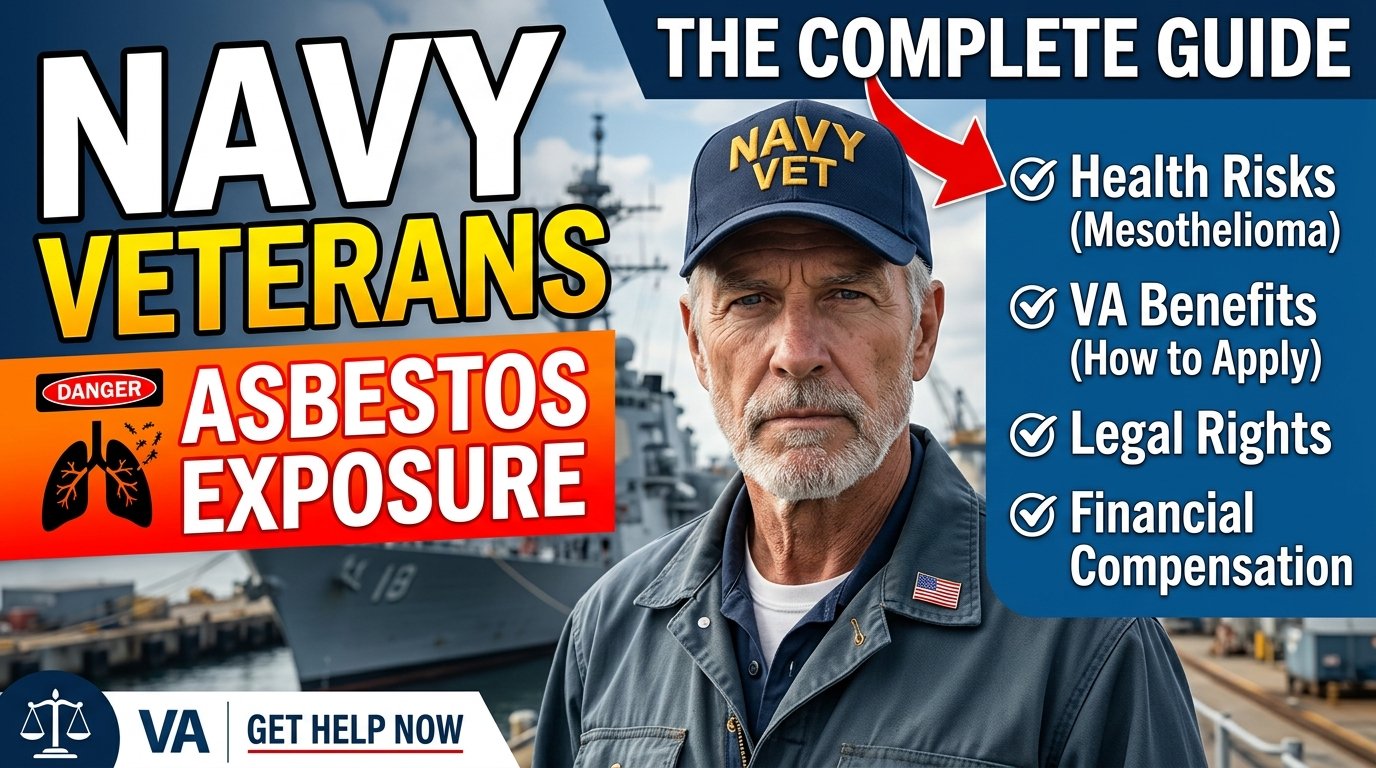
VA disability benefits and presumptive conditions for veterans (especially Navy and shipyard veterans), plus practical caregiver guides on coping, hospice, palliative care, and family support.
Veterans who served at Camp Lejeune between 1953 and 1987 were exposed to contaminated drinking water. The Camp Lejeune Justice Act of 2022 created a new pathway for these veterans and family members to seek compensation. Some Camp Lejeune veterans also have asbestos-related disease from base activities. The two pathways can sometimes be pursued together.
This guide explains Camp Lejeune mesothelioma cases in plain language. You will learn how to file VA claims for service-connected mesothelioma, how Camp Lejeune Justice Act civil claims work alongside, and what documentation supports both pathways.
Camp Lejeune service from 1953 to 1987 created multiple compensation pathways.
VA Service-Connected Mesothelioma
Mesothelioma in veterans with documented military asbestos exposure is generally considered service-connected and qualifies for VA disability compensation at the 100 percent rating. The exposure documentation comes from military occupational specialty records, ship histories, base records, and veteran statements. Camp Lejeune service alone does not establish asbestos exposure, but base activities involving asbestos products can.
The 100 percent disability rating produces tax-free monthly compensation that varies with dependents. The 2026 monthly amount for a married veteran with no other dependents is approximately 4,000 dollars. Surviving spouses also receive Dependency and Indemnity Compensation if the veteran’s death is service-connected.
Camp Lejeune Justice Act Claims
The Camp Lejeune Justice Act allows veterans, family members, and civilian workers exposed to contaminated water at Camp Lejeune between 1953 and 1987 to file civil claims for compensation. The Act creates a federal cause of action that bypasses some traditional barriers to suing the government. Mesothelioma is among the conditions that qualify for compensation under the Act.
The CLJA claims are filed in federal court and processed through a structured administrative claim system before potentially proceeding to litigation. The compensation is separate from VA disability and does not offset VA benefits in most cases. The Act has a deadline; claims must be filed within the statutory period.
CLJA claims and VA claims operate in parallel for eligible veterans.
Combining the Pathways
Veterans with both Camp Lejeune service and asbestos-related mesothelioma can pursue VA disability claims, CLJA civil claims, and asbestos product civil lawsuits together. Each pathway has its own evidence requirements and procedures. An experienced legal team coordinates the parallel filings.
The VA claim establishes service-connected disability and produces ongoing compensation. The CLJA claim addresses water contamination injury. The asbestos lawsuit pursues product manufacturers responsible for asbestos exposure. The combined recovery often exceeds what any single pathway would produce.
Documentation Required
Documentation includes military service records (DD-214 and personnel files), Camp Lejeune service dates, occupational specialty records showing asbestos-related work, medical records confirming mesothelioma diagnosis, and witness statements about base activities involving asbestos products. The legal team handles requests for service records that the veteran may not have on hand.
Surviving family members can pursue both VA survivor benefits and CLJA claims if the veteran has passed away. The deadlines and procedures are different, with both moving on their own timelines.
Closing Note
Camp Lejeune veterans with mesothelioma have multiple compensation pathways available. The combination of VA disability, CLJA civil claims, and asbestos product lawsuits can produce meaningful total compensation when coordinated by experienced counsel. Filing deadlines vary by pathway; acting promptly preserves all options.
This article is informational and does not constitute legal advice. Consult qualified counsel for guidance specific to your case.
You did not sign up for this. You are a spouse, a child, a sibling, or a close friend. You love someone who has been diagnosed with mesothelioma. And now, without anyone asking, without any training, without any preparation, you have become a caregiver.
You drive them to appointments. You talk to doctors. You manage medications. You cook meals. You clean the house. You handle insurance calls. You cry in the car so they do not see you.
You are exhausted. You are scared. You feel guilty for being tired because they are the one who is sick. You do not know where to turn for help.
This guide is for you. You will learn what to expect as a mesothelioma caregiver, how to manage physical symptoms, how to communicate with doctors, how to handle the emotional challenges, how to take care of yourself, where to find help, and how to navigate financial and legal issues.
No judgment. No guilt. Just practical, compassionate information to help you through this difficult journey.
Understanding Mesothelioma: What Your Loved One Is Facing
To be a good caregiver, you need to understand the disease.
Mesothelioma is a rare and aggressive cancer caused almost exclusively by asbestos exposure. It affects the tissue around the lungs (pleural mesothelioma) or the abdomen (peritoneal mesothelioma). It takes 20 to 50 years to develop after exposure.
Your loved one may have been exposed decades ago at work. A shipyard. A construction site. A factory. The Navy. They did not know the danger. No one told them. Now they are paying the price.
Treatment options include surgery, chemotherapy, radiation, and immunotherapy. The journey is hard. There will be good days and bad days. There will be setbacks and victories.
Your role is not to fix them. You cannot cure their cancer. Your role is to be with them. To support them. To love them. That is enough.
Home health visit.
The Physical Challenges: What to Expect and How to Help
Mesothelioma and its treatments cause many physical symptoms. Here is what to expect and how you can help.
Shortness of Breath (Pleural Mesothelioma)
Shortness of breath is the most common symptom of pleural mesothelioma. Fluid builds up around the lung. The tumor presses on the lung. Your loved one feels like they cannot get enough air.
How you can help:
Help them find a comfortable position. Sitting upright is often better than lying flat.
Use a fan or open a window. Moving air can help them feel less short of breath.
Encourage them to practice pursed-lip breathing. Breathe in through the nose. Breathe out slowly through pursed lips.
Ask the doctor about oxygen therapy. Portable oxygen can help them stay active.
Ask the doctor about a procedure to drain fluid from around the lung. This is called thoracentesis. It can provide immediate relief.
Pain
Mesothelioma can cause chest pain, abdominal pain, or back pain. The pain can come from the tumor pressing on nerves or from treatments like surgery.
How you can help:
Help them take pain medication as prescribed. Do not let them wait until the pain is severe.
Keep a pain diary. Write down when the pain is worst and what helps.
Ask about a referral to a pain specialist or palliative care doctor.
Try non-medication approaches like heat packs, cold packs, or gentle massage.
Fatigue
Extreme tiredness is one of the most common side effects of mesothelioma and its treatments. This is not normal tiredness that goes away with sleep. It is bone-deep exhaustion.
How you can help:
Encourage them to rest when they need to. Do not push them to be active when they are exhausted.
Help them save energy for what matters most.
Take over tiring tasks like cooking, cleaning, and shopping.
Encourage gentle activity when they feel up to it. A short walk can actually reduce fatigue.
Loss of Appetite and Weight Loss
Many mesothelioma patients lose weight. They may not feel hungry. Food may taste different. They may feel sick to their stomach.
How you can help:
Offer small, frequent meals instead of three large ones.
Serve whatever sounds good to them. This is not the time to worry about healthy eating. Get calories any way you can.
Keep snacks available. A few bites here and there add up.
Ask the doctor about medications that can increase appetite or reduce nausea.
Nausea and Vomiting
Chemotherapy can cause nausea and vomiting. Some patients also have nausea from the cancer itself.
How you can help:
Give anti-nausea medications as prescribed.
Offer bland foods like crackers, toast, or rice.
Keep them hydrated. Small sips of water, clear broth, or ginger ale.
Avoid strong smells that might trigger nausea.
Swelling in the Abdomen (Peritoneal Mesothelioma)
Fluid can build up in the abdomen. This causes swelling, discomfort, and shortness of breath.
How you can help:
Help them wear loose, comfortable clothing.
Ask the doctor about a procedure to drain fluid from the abdomen. This is called paracentesis.
Ask about dietary changes that might help.
The Emotional Challenges: For Your Loved One and For You
Mesothelioma is not just a physical disease. It is an emotional one too.
What Your Loved One Is Feeling
Your loved one is scared. They are facing their own mortality. They are worried about leaving you behind. They are angry about the asbestos companies that caused this. They are sad about the life they will not get to live.
They may have good days and bad days. Some days they will want to talk. Other days they will want to be alone. Some days they will be irritable or angry. Try not to take it personally. The cancer is talking, not them.
What You Can Do
Listen without trying to fix. They do not need you to solve their problems. They need you to hear them.
Ask what they need. Do not assume you know. “What would help you right now?” is a powerful question.
Respect their choices. It is their life and their body. Even if you disagree with their treatment decisions, support them.
Be present. Sometimes the best thing you can do is sit quietly with them. Hold their hand. Watch a movie together. Just be there.
What You Are Feeling
Do not ignore your own emotions. You are scared too. You are sad. You are angry. You are exhausted. You may feel guilty for being tired when they are the one who is sick.
These feelings are normal. They do not make you a bad person. They make you human.
Multigenerational family.
Caring for Yourself: The Most Important Thing You Can Do for Your Loved One
Here is the truth that every caregiver needs to hear. You cannot pour from an empty cup. If you burn out, you cannot help anyone.
Taking care of yourself is not selfish. It is essential. It is the best thing you can do for your loved one.
Signs of Caregiver Burnout
Watch for these warning signs:
Feeling tired all the time, even after sleeping
Getting sick more often
Losing interest in things you used to enjoy
Feeling irritable or angry with the person you are caring for
Having trouble sleeping
Feeling hopeless or trapped
Neglecting your own health
Using alcohol or drugs to cope
If you have these signs, you need to take action.
How to Prevent Burnout
Take breaks. It is okay to leave the house. It is okay to see a movie. It is okay to have lunch with a friend. Respite is not abandonment.
Ask for help. Other family members and friends want to help. Let them. Make a list of specific things they can do. Bring a meal. Sit with your loved one for an hour. Pick up prescriptions.
Join a caregiver support group. You need people who understand. Other caregivers get it in a way that others cannot.
See a counselor. Your mental health matters too. Many cancer centers have social workers who can help.
Stay connected. Do not isolate yourself. Call a friend. Go to church. Stay in touch with the outside world.
Take care of your body. Eat as well as you can. Try to get some exercise. Get enough sleep.
See your own doctor. Do not neglect your own health.
Practical Help for Caregivers
There are resources to help you.
Home Health Care
If you need help with daily tasks, home health aides can help. They can assist with bathing, dressing, eating, and other activities.
Medicare, Medicaid, and some private insurance plans cover home health care for patients who are homebound. Ask the doctor for a referral.
Respite Care
Respite care gives you a break. A trained caregiver comes to your home or your loved one goes to a facility for a short time. A few hours. A weekend. A week.
Ask the doctor or social worker about respite care options in your area.
Palliative Care
Palliative care is medical care that focuses on relieving symptoms and improving quality of life. It is not just for end of life. You can have palliative care at any stage.
A palliative care team can help with pain management, nausea, shortness of breath, and emotional support. They can also help coordinate care.
Ask the doctor for a referral to a palliative care specialist.
Hospice Care
When aggressive treatment is no longer working, hospice focuses on comfort and quality of life. Hospice can be provided at home, in a hospice facility, or in a nursing home.
Hospice provides:
Pain and symptom management
Emotional and spiritual support
Help with daily tasks
Respite care for family caregivers
Grief support for the family after the patient dies
Do not wait too long to start hospice. Many families wish they had started sooner.
Financial and Legal Help
The financial burden of mesothelioma is heavy. But there is help.
Asbestos Trust Funds
There are over sixty asbestos trust funds holding more than thirty billion dollars for victims of asbestos-related diseases. Your loved one may be eligible to file claims.
A mesothelioma lawyer can help. Most lawyers offer free consultations and work on contingency (you pay nothing upfront).
VA Benefits for Veterans
If your loved one is a veteran, they may be eligible for VA disability compensation and free health care.
A Veterans Service Officer (VSO) can help with the application for free.
Disability Benefits
If your loved one cannot work, they may be eligible for Social Security Disability Insurance (SSDI) or Supplemental Security Income (SSI).
Mesothelioma is on the Compassionate Allowances list. This means applications are processed faster.
Financial Assistance Programs
Many organizations offer financial assistance for cancer patients.
CancerCare: Provides limited financial assistance for transportation, childcare, and home care.
Patient Advocate Foundation: Helps with insurance issues and provides financial aid.
American Cancer Society: Offers some financial assistance programs.
Legal Help
An asbestos attorney can help your loved one file claims with trust funds and lawsuits against asbestos companies. This money can pay for medical bills, lost wages, and other expenses.
Do not worry about the cost. Most lawyers work on contingency. You pay nothing upfront. They only get paid if they win money for your loved one.
Talking to Children About a Mesothelioma Diagnosis
If you have children, you are probably wondering what to tell them.
Do Not Hide the Truth
Children know when something is wrong. They hear whispered conversations. They see you crying. If you do not tell them the truth, they will imagine things that are worse than reality.
Be Honest but Age-Appropriate
Young children (under 8): “Grandpa has a sickness in his chest. The doctors are giving him medicine to help. Sometimes the medicine makes him very tired. He still loves you very much.”
Older children (8-12): “Grandpa has a type of cancer called mesothelioma. The doctors are treating it. The treatments can be hard. Nothing you did caused this. You can ask me any questions.”
Teenagers: Teens can handle more information. Be direct. Let them know it is okay to be sad, angry, or scared. Encourage them to talk to a counselor or join a support group.
Reassure Them
Tell them clearly: “This is not your fault. Nothing you did caused this.”
Also reassure them that they will be taken care of. If you are worried about who will care for them, make a plan. Tell them the plan.
Frequently Asked Questions
How do I find a mesothelioma support group? Contact the Mesothelioma Applied Research Foundation (curemeso.org). They have online and in-person support groups for patients and caregivers. The Cancer Support Community also has support groups.
What is palliative care? Palliative care is medical care that focuses on relieving symptoms and improving quality of life. It is not just for end of life. You can have palliative care at any stage of the disease.
How do I find financial help for travel and lodging? Contact the American Cancer Society (1-800-227-2345) for information about Hope Lodge. They offer free lodging for cancer patients receiving treatment away from home. Mercy Medical Angels offers help with air travel.
What if I am a caregiver and I feel overwhelmed? You are not alone. Caregiver burnout is very common. Take breaks. Ask for help. Join a caregiver support group. See a counselor. You cannot pour from an empty cup.
When should we start hospice? Talk to the doctor about hospice when aggressive treatment is no longer helping. Do not wait too long. Hospice can provide months of comfort and support. Many families wish they had started sooner.
Can I get paid for being a caregiver? Some states have programs that pay family caregivers. Veterans may be eligible for the VA’s Program of Comprehensive Assistance for Family Caregivers. Ask the doctor or social worker about programs in your area.
Final Thoughts: You Are Doing a Hard Thing Well
Caregiving is the hardest job you will ever do. It is exhausting. It is emotional. It is relentless. There will be days when you feel like you are failing. There will be days when you feel guilty for wanting your old life back.
That does not make you a bad person. It makes you human.
You are doing a hard thing well. You are showing up. You are loving someone through the hardest journey of their life. That is heroic.
But you cannot do it alone. Reach out for help. Take breaks. Take care of yourself. You matter too.
And remember why you are doing this. Because you love them. Because they would do it for you. Because love is the most powerful force in the universe.
You are not alone. There are doctors, nurses, social workers, support groups, and other caregivers ready to help you. Reach out. Ask for help. You deserve it.
Disclaimer: This article provides general information about caregiving for someone with mesothelioma. It does not constitute medical advice or professional caregiving advice. Every patient’s situation is different. Always consult with qualified medical professionals about your loved one’s specific needs. If you are a caregiver feeling overwhelmed, reach out for help. You matter too. You cannot pour from an empty cup. Take care of yourself.
The VA Compensation and Pension exam is a key step in establishing service-connected disability for mesothelioma. The exam evaluates the veteran’s medical condition and helps the VA decide the disability rating. Going in prepared makes a meaningful difference.
This guide explains VA C&P exams for mesothelioma in plain language. You will learn what the exam covers, what to bring, what questions to expect, and how the results affect your disability rating.
VA C&P exams establish the medical basis for service-connected disability ratings.
What the Exam Is For
The C&P exam is a medical examination performed by a VA or contracted physician. The purpose is to document your current medical condition and how it affects your daily functioning. The findings help the VA assign a disability rating that determines your monthly compensation.
For mesothelioma, the exam typically establishes the diagnosis, the impact on breathing and energy, the prognosis, and the connection to military asbestos exposure. The examiner reviews medical records, asks about symptoms, and performs a physical examination.
What to Bring
Bring all medical records related to your mesothelioma diagnosis: pathology reports, imaging studies, treatment summaries, and current medication list. Bring your military service records, particularly your DD-214 and any documentation of asbestos exposure during service. Bring a list of your current symptoms and how they affect your daily activities.
Bring a family member or friend if possible. Having another person present helps you remember what was discussed and provides support. The companion can also speak to changes in your functioning that you might minimise or forget.
Documentation of service-connected exposure supports the C&P examiner’s findings.
Questions to Expect
The examiner will ask about when you were diagnosed, what treatments you have received, what symptoms you currently experience, how the disease affects your ability to work, how it affects your daily activities, and what your prognosis is according to your treating oncologist. They will also ask about your military service and any asbestos exposure during it.
Be specific and concrete in your answers. Do not minimise. Veterans who answer questions about their functioning by saying “I’m fine” or “I manage” often receive lower disability ratings than their condition warrants. Describe what you actually cannot do, how often you tire, how often you have pain, and how much help you need.
The Disability Rating
Mesothelioma typically receives a 100 percent disability rating. The VA uses a schedule of ratings that assigns percentages to specific conditions. Active mesothelioma at the 100 percent rating produces the maximum monthly compensation. The rating is reviewed periodically. If the disease enters remission for an extended period, the rating may be reduced over time.
Special Monthly Compensation may apply on top of the 100 percent rating when the veteran needs additional support. Aid and Attendance, Housebound, and other categories provide additional monthly payments when the veteran requires care assistance.
After the Exam
The examiner submits a written report to the VA. The VA then issues a rating decision based on the report and other evidence. The decision is mailed to the veteran. If the rating is satisfactory, monthly compensation begins. If the rating is too low or service connection is denied, the veteran can appeal.
VA appeals are common in complex disability cases. The Higher-Level Review and Board of Veterans’ Appeals processes allow review by senior decision-makers. Veteran service organisations and accredited VA representatives can help with appeals.
Closing Note
The C&P exam is your opportunity to ensure the VA understands the full impact of mesothelioma on your life. Prepare carefully. Bring documentation. Be specific. Ask questions if anything is unclear. The exam outcome shapes your monthly compensation and benefits for years to come.
This article is informational and does not replace personalised guidance from a VA-accredited representative or attorney.
Asbestos exposure patterns differed significantly across military service branches. Navy veterans had heavy exposure aboard ships. Marines had exposure on bases and aboard ships. Army veterans encountered asbestos in vehicle maintenance and engineering activities. Air Force veterans had exposure to brake systems and base infrastructure. Each branch’s exposure profile shapes how mesothelioma claims are documented.
This guide explains mesothelioma veterans compensation by service branch in plain language. You will learn the specific exposure patterns, common occupational specialties, and documentation pathways for each major branch.
Asbestos exposure patterns differ by military branch and occupational specialty.
Navy Veterans
Navy veterans constitute the largest single group of mesothelioma cases among veterans. The reason is that ships built before the 1980s used extensive asbestos in insulation, gaskets, brakes, valves, and many other components. Sailors who served aboard those ships were routinely exposed during normal operations and especially during repairs and overhauls.
Specific high-exposure roles included boiler tenders, machinist’s mates, hull technicians, pipefitters, electricians, damage control specialists, and many other ratings that worked in engineering spaces. Service aboard certain ships and during certain time periods is particularly associated with elevated exposure risk. Ship-specific records can support exposure documentation.
Marine Corps Veterans
Marine veterans had asbestos exposure both aboard Navy ships during deployments and at land-based facilities. Camp Lejeune water contamination affects a separate but overlapping group. Marines in maintenance roles, vehicle mechanics, motor pool personnel, and base infrastructure workers had specific exposure patterns. Combat engineers and explosive ordnance disposal personnel had occasional exposure during demolition work that disturbed asbestos materials.
Service-connected mesothelioma compensation respects the asbestos exposure veterans incurred.
Army Veterans
Army exposure patterns centred on vehicle maintenance, particularly brake and clutch work that involved asbestos-containing friction materials. Engineers, motor pool personnel, and maintenance specialists had ongoing exposure. Construction battalions and engineering units had exposure during base construction and repair activities involving asbestos products.
Army veterans who served in older buildings on stateside or overseas posts also had passive exposure from deteriorating insulation and infrastructure. The VA recognises these exposure patterns and accepts evidence of military occupational specialties consistent with asbestos work as supporting documentation.
Air Force Veterans
Air Force exposures were concentrated in aircraft maintenance, particularly brake systems and certain engine components, and in base infrastructure built during the asbestos era. Crew chiefs, maintenance technicians, fire fighters, and base civil engineers had exposure patterns that the VA recognises.
Aircrew personnel had less direct exposure but still encountered asbestos in cockpits, support equipment, and ground operations. Documentation of specific roles and time periods supports VA disability claims.
Coast Guard Veterans
Coast Guard veterans aboard older cutters had exposure patterns similar to Navy veterans. Engineering personnel, machinist’s mates, and other technical ratings worked in spaces with asbestos insulation and components. Shore-based personnel at older facilities had passive exposure to deteriorating materials.
The Coast Guard’s smaller size meant fewer total cases but the per-veteran exposure pattern in technical roles was substantial. VA recognition of Coast Guard mesothelioma claims follows the same standards as other branches.
Documentation Specifics by Branch
Each branch maintains detailed records of unit assignments, occupational specialties, and ship or aircraft assignments. The VA can request these records when supporting a claim. Veterans should provide their DD-214, occupational specialty codes, and detailed service histories. Buddy statements from fellow service members who can corroborate exposure activities also help.
Specialty firms experienced in veteran mesothelioma claims work with each branch’s record systems. They know what evidence to request, what specific occupational codes indicate exposure, and how to present the case for the strongest possible disability rating.
Closing Note
Veterans with mesothelioma have established compensation pathways through the VA disability system regardless of which branch they served in. The exposure patterns differ but the recognition is consistent. Documenting your specific service history and occupational specialty supports the strongest possible VA claim.
This article is informational and does not constitute legal advice. Consult a VA-accredited representative or attorney for guidance specific to your service history.
The 100 percent disability rating for service-connected mesothelioma is the foundation of VA compensation, but it is not the ceiling. Special Monthly Compensation, often abbreviated SMC, provides additional monthly payments on top of the base rating when the veteran meets specific criteria related to severity of disability.
This guide explains VA Special Monthly Compensation for mesothelioma veterans in plain language. You will learn about the SMC categories, how they apply to advanced mesothelioma, and how to apply for them.
SMC adds to the base disability rating when criteria are met.
SMC Categories Relevant to Mesothelioma
SMC has multiple categories. The categories most relevant to mesothelioma veterans include SMC-L for veterans who need regular aid and attendance from another person, SMC-S for housebound status, and SMC-T for veterans needing higher levels of care. The specific category depends on the veteran’s level of dependency on others for daily activities.
SMC-L Aid and Attendance applies when the veteran needs help with daily activities such as bathing, dressing, eating, or medication management. The 2026 monthly amount in addition to the base 100 percent rating is approximately 1,000 dollars to 4,400 dollars depending on the specific subcategory.
Housebound Status
SMC-S Housebound status applies when the veteran is substantially confined to home due to disability. This does not require the absolute inability to leave home but means that disability significantly limits the veteran to the home environment. Some mesothelioma patients in advanced stages qualify based on the combined effects of breathlessness, fatigue, and treatment side effects.
The SMC-S monthly amount is smaller than Aid and Attendance but still provides meaningful additional compensation.
SMC categories recognise the practical impact of advanced disability.
How to Apply
SMC is requested through the VA. The application requires medical evidence of the level of care needed. The VA Form 21-2680 is used to document Aid and Attendance needs. The treating physician fills out the form describing the veteran’s specific functional limitations and care requirements.
If the veteran is already at the 100 percent rating for mesothelioma, the SMC application is generally separate from but coordinated with the base claim. The VA reviews the medical evidence and decides which SMC category applies.
Surviving Spouse Aid and Attendance
Surviving spouses of veterans who died from service-connected mesothelioma may also be eligible for Aid and Attendance benefits if they need help with daily activities and meet financial criteria. This is separate from but coordinated with Dependency and Indemnity Compensation. Surviving spouses can apply for both.
The application uses VA Form 21-534EZ for surviving spouse pension benefits with Aid and Attendance enhancement. The financial means test does not apply to DIC but does apply to certain pension benefits. A VA-accredited representative can help with the application strategy.
Closing Note
Special Monthly Compensation provides important additional support for veterans with advanced mesothelioma and their surviving spouses. The categories address the real practical needs of patients in late-stage disease. Applying for SMC alongside the base disability rating maximises monthly support.
This article is informational and does not constitute legal advice. Consult a VA-accredited representative or attorney for specific guidance.
Caring for a mesothelioma patient is exhausting. Many caregivers are themselves spouses of veterans, often elderly, and have their own evolving care needs. The VA Aid and Attendance benefit can provide significant monthly compensation to support a surviving spouse’s care needs after the veteran has passed away.
This guide explains VA Aid and Attendance for mesothelioma spouses in plain language. You will learn the eligibility criteria, the application steps, what the benefit pays, and how to combine it with other VA survivor benefits.
Aid and Attendance recognises the daily care needs of surviving spouses.
Eligibility Basics
Aid and Attendance for surviving spouses of wartime veterans requires three elements. The deceased veteran must have served at least ninety days of active duty with at least one day during a wartime period. The spouse must have been married to the veteran for the required period under VA rules and not have remarried (or, if remarried, the subsequent marriage ended). The spouse must have ongoing care needs that meet specific criteria.
The care needs criteria include needing help with daily activities such as bathing, dressing, feeding, or toileting. Being bedridden. Living in a nursing facility. Or having significant cognitive or visual impairment. Mesothelioma’s impact on the surviving spouse’s own caregiving capacity often qualifies them for the benefit.
Financial Eligibility
Aid and Attendance has financial eligibility limits for the pension version. The combined assets and income of the spouse must fall below VA thresholds. Unreimbursed medical expenses, including cost of long-term care, can be deducted from income for the eligibility calculation. Many spouses qualify after these deductions even when their headline income would seem too high.
Note that DIC, the Dependency and Indemnity Compensation for surviving spouses of veterans who died from service-connected disease, does not have the same income test. Mesothelioma surviving spouses who qualify for DIC at any income level can also seek the Aid and Attendance enhancement.
The benefit supports paid caregiver costs and home care services.
Monthly Benefit Amounts
The 2026 maximum monthly Aid and Attendance benefit for a surviving spouse is approximately 1,500 dollars in addition to the base pension or DIC payment. The exact amount varies with countable income; spouses with higher countable income receive less, while spouses with low countable income or substantial unreimbursed medical expenses can receive the maximum.
For a spouse already receiving DIC, the Aid and Attendance enhancement adds to the base monthly DIC amount. The combined total can be substantial and provides meaningful support for paid caregiver costs, home health aide services, or assisted living facility expenses.
Application Process
The application uses VA Form 21-534EZ for surviving spouse benefits with the Aid and Attendance section completed. Supporting documents include the marriage certificate, the veteran’s death certificate, the veteran’s military service record (DD-214), evidence of the service-connected cause of death, and medical evidence of the spouse’s care needs.
Medical evidence of care needs comes from VA Form 21-2680, which the spouse’s physician completes. The form documents specific functional limitations and care requirements. Detailed and specific descriptions support the strongest claim.
Veteran service organisations including the American Legion, VFW, DAV, and Vietnam Veterans of America provide free help with applications. VA-accredited claims agents and attorneys also help, though they may charge fees for benefit increases. The VSOs are a no-cost first option for most surviving spouses.
Combining With Other Benefits
Aid and Attendance combines with DIC to produce a higher total monthly benefit for eligible surviving spouses. The combined amount can exceed three thousand dollars per month for spouses needing high levels of care. The benefit is tax-free and not counted against most state Medicaid eligibility tests.
The benefit can be used for any purpose. There is no requirement that it be spent specifically on care, although that is usually how recipients use it. Hiring a home health aide, paying for assisted living, supplementing other income, or saving for future needs all qualify.
Closing Note
Aid and Attendance is a meaningful but underused benefit for surviving spouses of veterans who died from mesothelioma. The application process is administrative. The benefit, once granted, continues for the spouse’s lifetime in most cases. Applying alongside DIC ensures that the surviving spouse receives the full support the VA system provides for service-connected losses.
This article is informational and does not constitute legal or financial advice. Consult a VA-accredited representative for guidance specific to your situation.
Mesothelioma caregiving is a marathon disguised as a sprint. The early days after diagnosis are intense but the marathon begins quietly when treatment moves into ongoing management. Months pass. Years pass for some patients. The caregiver who started strong begins to fray. Burnout arrives, sometimes recognised, sometimes not.
This guide describes caregiver burnout in mesothelioma families in plain language. You will learn the warning signs, the practical steps that actually help, and the resources that exist to support caregivers themselves. The work is real. So is the help.
Caregiver burnout is common, predictable, and addressable when recognised early.
Recognising Burnout
Burnout shows up first as exhaustion that does not respond to a night of sleep. The caregiver feels emptied. The patient’s needs that used to feel manageable now feel overwhelming. Resentment surfaces, often followed by guilt. Sleep becomes irregular. Appetite changes. The caregiver may stop returning friends’ calls, miss medical appointments for themselves, and lose interest in activities that used to provide relief.
The signs progress over weeks and months. Recognising them early matters. Caregivers who acknowledge burnout and seek support recover more quickly. Caregivers who push through often crash, sometimes with their own significant medical events that disrupt their ability to provide care at all.
The Specific Pressures of Mesothelioma Caregiving
Mesothelioma caregiving has specific features that distinguish it from other cancer caregiving. The disease is relatively rare, so caregivers often lack peers in their immediate community. The treatments are intensive and sometimes require travel to specialty centres. The legal and compensation work runs alongside medical care. The latency period means many caregivers are themselves elderly spouses with their own health issues.
The combination of medical complexity, legal demands, social isolation, and caregiver age makes burnout especially common. Caregivers benefit from naming the specific pressures rather than treating their experience as just generic stress.
Family support and respite care reduce caregiver isolation.
Practical Steps That Help
The most useful single step is to formalise help from family and friends rather than waiting to be offered. Make a list of specific tasks: meal preparation on Tuesdays, transportation to chemotherapy on Wednesdays, weekend respite for four hours, weekly grocery shopping. Distribute the list to specific people who have offered to help. Vague offers rarely produce help. Specific assignments often do.
Schedule respite. Hire a home health aide for several hours a week if you can afford it. Ask a hospice or palliative care service whether they can provide respite even if the patient is not yet ready for hospice. Many cancer support organisations including CancerCare and the American Cancer Society can subsidise short-term respite care for caregivers.
Maintain your own medical care. Keep your own appointments. Do not skip your own primary care visits. Many caregivers neglect their own health during the patient’s illness and end up with their own diagnoses that compound the family’s situation. Your health is part of the household’s health.
Mental Health Support for Caregivers
Therapy with a clinician familiar with caregiver dynamics is one of the most consistently helpful interventions. Insurance plans cover therapy under behavioural health benefits. The investment of an hour a week often produces meaningful improvements in coping, sleep, and emotional resilience.
Caregiver-specific support groups exist through cancer organisations and through faith communities. Online groups can be useful for caregivers who cannot leave home or are geographically isolated. Hearing from others in similar situations reduces the isolation that fuels burnout.
Financial and Legal Pressures
Mesothelioma’s compensation pathways often require caregiver involvement in evidence gathering, depositions, and document collection. The legal work happens during the same months when medical care is most intense. The combined load can be overwhelming.
Lean on the legal team. Specialty mesothelioma firms handle most of the work. The caregiver’s role is usually to provide information rather than to drive the process. Ask the firm what they need and when, and do not feel obligated to handle work the firm should be doing. The contingency fee covers the firm’s labour.
Resources Specifically for Mesothelioma Caregivers
The Mesothelioma Applied Research Foundation maintains caregiver resources. The American Cancer Society’s caregiver support line is available 24 hours a day. The National Family Caregiver Support Programme provides services through state agencies on aging. The VA’s Caregiver Support Programme provides specific resources for caregivers of veterans.
Tap these resources rather than trying to figure out everything alone. The systems exist because the need is widespread.
Closing Note
Caregiver burnout is not a personal failing. It is a predictable response to sustained, complex care under conditions that would exhaust anyone. The right response is not to push through alone but to use the resources, ask for specific help, maintain your own health, and accept that the caregiver’s wellbeing is part of the patient’s outcome.
If you are reading this for yourself, take one specific step in the next twenty-four hours. Schedule a respite session. Make a help list. Call a support line. The smallest step starts the process of recovery.
This article is for educational purposes and does not replace personalised guidance from a clinician or social worker.
Hospice and palliative care are sometimes confused. Both focus on comfort and quality of life. They are not the same. Understanding the difference helps mesothelioma patients and families decide when each is appropriate and how to access them.
This guide explains hospice and palliative care for mesothelioma in plain language. You will learn how each works, when each is appropriate, what services they provide, and how insurance covers them.
Hospice and palliative care focus on comfort but operate under different rules.
Palliative Care: Comfort During Treatment
Palliative care is symptom-focused medical care that runs alongside disease-modifying treatment. The patient continues chemotherapy, immunotherapy, surgery recovery, or whatever the active treatment plan involves. Palliative care manages pain, fatigue, breathlessness, anxiety, sleep, and other symptoms in parallel.
Palliative care can begin at diagnosis. The earlier it engages, the better. Studies have shown that early palliative care alongside cancer treatment improves both quality of life and sometimes survival. The misconception that palliative care is only for end-of-life situations leads many patients to delay accessing it. Ask your oncologist for a palliative care consultation when symptom management becomes complex.
Hospice: Comfort When Treatment Stops
Hospice is a specific Medicare and Medicaid programme for patients with terminal illness whose life expectancy is six months or less. Patients enrolled in hospice forgo curative treatment in exchange for comprehensive comfort-focused care delivered by an interdisciplinary team. The team typically includes a physician, nurse, social worker, chaplain, home health aide, and volunteer support.
Hospice care is usually provided at home, with home visits from the team and 24-hour phone availability for symptom emergencies. Inpatient hospice facilities exist for patients whose symptoms cannot be managed at home or whose family cannot provide the level of care needed. Most patients in mesothelioma hospice receive care at home.
Hospice teams provide regular home visits and 24-hour symptom management support.
When to Choose Hospice
The transition to hospice is hard for many patients and families. The decision usually involves the oncologist, the patient, and the family explicitly discussing that further disease-modifying treatment is unlikely to extend life and may worsen quality of life. Hospice becomes the appropriate path forward.
Many families regret delaying hospice rather than enrolling. The benefits of hospice care, including pain control, family support, and home-based services, are most fully realised when there is time. Patients who enrol in the final days often do not benefit from the support hospice can provide. Earlier enrolment, when life expectancy is weeks to months rather than days, allows the system to work as designed.
Insurance Coverage
Medicare covers hospice as a defined benefit. Medicaid covers hospice in all states. Most commercial insurance plans cover hospice, often modelled on the Medicare benefit. Coverage typically includes all hospice-related services with minimal out-of-pocket cost. Hospice care is one of the most consistently covered medical services in the US system.
Palliative care coverage is more variable. Some insurance plans cover palliative care visits under standard medical benefits. Others require specific authorisation. Hospital-based palliative care teams typically work within standard insurance frameworks.
Choosing a Provider
Hospice and palliative care providers vary in quality. Look for providers that are nonprofit, certified by the Medicare programme, and well-reviewed by other families in your community. Ask about the provider’s typical caseload, the staffing of their interdisciplinary teams, and how they handle after-hours emergencies.
The Hospice and Palliative Care Coalition and similar organisations maintain provider directories. Your hospital social worker or oncology nurse can also recommend providers they have worked with. The right provider makes a meaningful difference in the family’s experience.
Closing Note
Hospice and palliative care are not failures. They are appropriate medical care delivered at the right phase of illness. Mesothelioma’s trajectory often includes a long arc of active treatment followed by a transition to comfort-focused care. Both phases deserve full clinical attention and family engagement.
Ask your oncology team early whether palliative care alongside active treatment would help. Ask hospice questions earlier rather than later when the disease progresses. The conversations are hard but the support that follows is meaningful.
This article is for educational purposes and does not replace personalised guidance from a clinician or social worker.
End-of-life planning is uncomfortable for everyone. For mesothelioma families, the planning matters more than for many other situations because of the trajectory of the disease and the financial and legal complexity surrounding asbestos compensation. Practical preparation reduces the burden on family members during the hardest weeks.
This guide describes end-of-life planning for mesothelioma families in plain language. You will learn about advance directives, POLST forms, financial preparation, asbestos compensation continuity, and the practical conversations that families benefit from having while the patient is well enough to participate.
End-of-life planning is a gift to the family that follows.
Advance Directives
An advance directive is a legal document specifying medical treatment preferences if the patient becomes unable to communicate. The two main components are a living will, which describes the patient’s wishes about specific treatments, and a healthcare power of attorney, which designates a person to make medical decisions if the patient cannot.
Every mesothelioma patient should complete advance directives early in the disease course. Templates are available through state bar associations, hospital social work teams, and online resources like the Five Wishes document. Sign the documents with witnesses or a notary as state law requires. Distribute copies to family members and the medical team.
POLST Forms
POLST stands for Physician Orders for Life-Sustaining Treatment. It is a medical order signed by both patient and physician that translates advance directive preferences into specific clinical orders. Unlike an advance directive that guides decisions in the future, a POLST form is an active order that emergency responders and hospital teams follow immediately.
POLST is appropriate for patients in advanced illness. The form covers CPR preferences, intubation, hospital transport, and other key decisions. The form travels with the patient between care settings. For mesothelioma patients in late-stage disease, POLST often makes the difference between care that follows the patient’s wishes and default emergency interventions that they would have declined.
Family discussions ahead of crisis make decision-making easier when needed.
Financial and Legal Preparation
Wills, financial powers of attorney, and beneficiary designations should be reviewed and updated. The mesothelioma context adds complexity because asbestos compensation may be paid over time and after death. Estate planning attorneys familiar with mesothelioma cases handle these issues efficiently.
Trust fund claims and civil lawsuits often continue after the patient’s death. Designating a personal representative who can continue these claims is part of end-of-life planning. The mesothelioma legal team coordinates with estate planning to ensure continuity.
Family Conversations
The conversations that families benefit from having include where the patient wishes to be cared for in the final phase, who will provide care, what funeral or memorial preferences exist, what financial arrangements have been made, and what the patient hopes for the surviving family. The Conversation Project provides guides for starting these discussions.
The conversations are hard. Many families avoid them. The avoidance creates more difficulty later, when decisions need to be made under pressure without clear guidance. Patients who participate in these conversations while well enough often report relief at having communicated their wishes. Family members report appreciation later for having clarity.
Veterans and Military Honours
Veterans with service-connected mesothelioma are eligible for military funeral honours, burial in a national cemetery, and other veteran-specific end-of-life benefits. Surviving spouses receive Dependency and Indemnity Compensation if the death is service-connected. Planning for these benefits in advance ensures they are received without delay.
The VA and veteran service organisations help with end-of-life planning specifically for veterans. The benefits available are often more extensive than families realise. Tapping the help is worthwhile.
Closing Note
End-of-life planning is among the most generous gifts a mesothelioma patient can give to surviving family. The advance directives, POLST forms, estate documents, and family conversations reduce the burden of decisions during the hardest weeks. The planning itself can be done across weeks or months while the patient is well enough to participate fully.
Begin the conversations early. Engage estate planning, palliative care, and hospice as appropriate. The work is not pessimistic. It is practical, and it expresses the kind of care that the patient has shown for the family throughout life.
This article is for educational purposes and does not constitute legal, financial, or medical advice. Consult qualified professionals for your specific situation.
You Served Your Country. Now Let Your Country Help You.
You raised your right hand and took an oath. You served on a ship, in a shipyard, or on a naval base. You worked in engine rooms, boiler rooms, or pipe shops. You did your job without complaint. You did not know that every day you were breathing in tiny asbestos fibers. No one told you it was dangerous. No one warned you.
Now, decades later, you are sick. Shortness of breath. A cough that will not go away. Chest pain. Maybe you have been diagnosed with mesothelioma, lung cancer, or asbestosis.
You are not alone. Thousands of Navy veterans have been diagnosed with asbestos-related diseases. The Navy used more asbestos than any other branch of the military. Ships built before the 1980s were filled with asbestos from bow to stern.
This guide is for you. You will learn why the Navy used so much asbestos, which jobs and ships had the highest exposure, what diseases are caused by asbestos, how to get VA benefits, how to file legal claims, and how to get the financial compensation you deserve. No complicated language. No confusion. Just clear, honest information to help you and your family.
Why the Navy Used So Much Asbestos
Asbestos was used extensively by the Navy for decades. Why? Because it was the perfect material for ships.
Asbestos is strong. It can withstand high temperatures. It does not burn. It is resistant to saltwater corrosion. It is an excellent insulator. And it was cheap.
On a ship, fire is the greatest danger. A fire at sea can be a death sentence. Asbestos was used to fireproof every part of the ship. It was used in engine rooms, boiler rooms, and fuel storage areas. It was used to insulate pipes, boilers, and turbines. It was used in gaskets, valves, pumps, and packing materials. It was used in wall panels, ceiling tiles, and floor tiles. It was used in electrical wiring, brake pads, and clutch plates.
Every ship built between the 1930s and the early 1980s was filled with asbestos. Thousands of tons of asbestos on a single ship.
The Navy knew asbestos was dangerous. They had studies showing the risks. But they kept using it anyway. They did not warn the sailors. They did not provide protective equipment. They did not train sailors on how to work safely with asbestos.
That was wrong. And the law says the Navy and the companies that made asbestos products must pay for the harm they caused.
Naval shipyard background.
Which Navy Jobs Had the Highest Asbestos Exposure?
Every sailor on a ship was exposed to asbestos. But some jobs had much higher exposure than others.
Boiler Tenders
Boiler tenders worked directly with boilers that were insulated with asbestos. They worked in boiler rooms where asbestos fibers were constantly in the air. They repaired and maintained boilers, disturbing the asbestos insulation. This is one of the highest-risk jobs.
Machinist’s Mates
Machinist’s mates worked on engines, pumps, and other machinery. They replaced gaskets and packing materials that contained asbestos. They worked in confined spaces where asbestos fibers accumulated. Their exposure was extremely high.
Pipefitters and Pipefitter Mates
Pipefitters worked on pipes throughout the ship. The pipes were insulated with asbestos. When they cut, removed, or repaired pipes, they released asbestos fibers into the air. They also worked with asbestos gaskets and packing.
Enginemen
Enginemen worked in engine rooms and fire rooms. They operated and maintained engines, boilers, and auxiliary equipment. They were surrounded by asbestos every single day.
Electrician’s Mates
Electrician’s mates worked with electrical wiring that was insulated with asbestos. They cut and stripped wires, releasing asbestos fibers. They also worked in confined spaces where asbestos exposure was high.
Hull Maintenance Technicians
Hull maintenance technicians repaired and maintained the ship’s structure. They worked with asbestos-containing materials used in bulkheads, decks, and other structural components.
Insulators
Insulators were responsible for installing and repairing insulation throughout the ship. Much of that insulation contained asbestos. This job had probably the highest asbestos exposure of all.
Shipyard Workers
Shipyard workers built, repaired, and maintained ships. They worked with asbestos every day. Welders, pipefitters, electricians, insulators, carpenters, and laborers were all exposed. Even office workers and storekeepers in shipyards were exposed to asbestos fibers in the air.
Damage Controlmen
Damage controlmen responded to emergencies on the ship, including fires. When fires damaged asbestos-containing materials, they were exposed to high levels of asbestos fibers.
Which Navy Ships Had Asbestos?
Almost every ship built before the 1980s contained asbestos. This includes:
If you served on any ship built before the early 1980s, you were exposed to asbestos. The age of the ship matters more than the type. Older ships had more asbestos.
Veterans memorial.
What If You Never Served on a Ship?
Many Navy veterans were exposed to asbestos even if they never set foot on a ship.
Shipyard workers: You worked in shipyards building, repairing, or maintaining ships. The shipyards themselves were filled with asbestos.
Shore-based personnel: You worked in naval bases, barracks, offices, and other facilities that contained asbestos in insulation, flooring, ceiling tiles, and wall panels.
Aviation personnel: You worked on aircraft that contained asbestos in brake pads, gaskets, and insulation.
Support personnel: You worked in any capacity on a naval base. Asbestos was everywhere.
If you served in the Navy, you were exposed. Period.
Asbestos-Related Diseases in Navy Veterans
The same asbestos diseases that affect civilian workers also affect Navy veterans.
Mesothelioma
Mesothelioma is a rare and aggressive cancer that affects the lining of the lungs, abdomen, or heart. Almost every case of mesothelioma is caused by asbestos exposure. Navy veterans have one of the highest rates of mesothelioma of any group.
Lung Cancer from Asbestos
Asbestos causes lung cancer. If you were exposed to asbestos and also smoked, your risk is 50 to 90 times higher than someone who did neither. Many Navy veterans have developed lung cancer from their asbestos exposure.
Asbestosis
Asbestosis is a serious lung disease caused by scarring from asbestos fibers. It causes shortness of breath that gets worse over time. There is no cure.
Pleural Plaques and Thickening
These are non-cancerous conditions that affect the lining of the lungs. They are a sign that you have been exposed to asbestos. They can cause chest pain and shortness of breath.
VA Benefits for Navy Veterans with Asbestos Disease
The Department of Veterans Affairs (VA) recognizes asbestos-related diseases as service-connected conditions for Navy veterans who were exposed to asbestos during their service.
VA Disability Compensation
If you have a service-connected asbestos-related disease, you may receive monthly tax-free disability payments. The amount depends on how disabled you are.
For 2025, a single veteran with a 100 percent disability rating receives over $3,800 per month. Veterans with mesothelioma almost always receive a 100 percent rating.
VA Health Care
Veterans with service-connected asbestos diseases are eligible for free health care at VA hospitals and clinics. This includes doctor visits, hospital stays, surgery, chemotherapy, radiation, and immunotherapy.
How to Apply for VA Benefits
You can apply online at VA.gov, by mail, or in person at a VA regional office. You will need:
Your military discharge papers (DD214)
Medical records showing your diagnosis
Evidence of asbestos exposure during your service
A Veterans Service Officer (VSO) can help you with your application for free. Contact the American Legion, VFW, or DAV.
Legal Rights: Compensation from Asbestos Companies
In addition to VA benefits, you may also be entitled to compensation from the companies that made the asbestos products that caused your disease.
The Navy did not make asbestos. They bought it from private companies. Companies like Johns-Manville, Owens Corning, W.R. Grace, Pittsburgh Corning, and many others.
These companies knew asbestos was dangerous. They hid the truth. They kept selling asbestos to the Navy. They put your life at risk.
The law says they must pay.
Asbestos Bankruptcy Trusts
Many asbestos companies went bankrupt because of lawsuits. When they went bankrupt, courts required them to set aside money for victims. There are over sixty trust funds holding more than thirty billion dollars.
You can file claims with these trust funds. Your lawyer will help you identify which trust funds apply to your case.
Lawsuits Against Asbestos Companies
You can also sue companies that are still in business. Lawsuits can result in larger payouts than trust funds, but they take longer and there is a risk of losing.
How Much Money Can You Get?
Every case is different. For Navy veterans with mesothelioma, compensation often ranges from 1millionto2 million or more. For lung cancer, compensation often ranges from 100,000to500,000. For asbestosis, compensation is generally lower.
Your lawyer can give you a better estimate based on your specific situation.
Do You Need a Lawyer?
Yes. Asbestos claims are complicated. You need a lawyer who specializes in asbestos cases. Do not hire a general personal injury lawyer.
The best asbestos lawyer for Navy veterans will:
Give you a free consultation
Work on contingency (you pay nothing upfront)
Have handled hundreds of Navy veteran cases
Know which trust funds are paying and how much
Be willing to travel to you
Do not worry about finding a lawyer in your city. Asbestos lawyers work with veterans all over the country. They can handle everything by phone, mail, and email.
What If You Have Already Applied for VA Benefits and Were Denied?
Many veterans are denied the first time they apply for VA benefits. Do not give up. You can appeal.
The appeals process has several levels. A VSO or lawyer can help you with your appeal. Many veterans win their appeals.
What If You Smoked?
Many Navy veterans smoked. That does not disqualify you from compensation. The law recognizes that asbestos contributed to your disease, even if smoking also contributed.
If you have lung cancer and you both smoked and were exposed to asbestos, you can still get compensation. Your compensation may be reduced, but you can still get money.
Do not let fear of smoking history stop you from calling a lawyer.
What If Your Loved One Died from an Asbestos Disease?
You can still file claims on their behalf. This is called a wrongful death claim. The money goes to the spouse, children, or other dependents.
Do not wait. There are deadlines for filing wrongful death claims. Call a lawyer as soon as possible.
Frequently Asked Questions
How do I prove I was exposed to asbestos in the Navy? Your service records show where you served and what your job was. Navy records show what ships had asbestos. Your lawyer can also get statements from fellow service members who remember working with asbestos.
Do I need to know exactly which product caused my disease? No. You just need to show that you were exposed to asbestos during your service. Your lawyer will help identify which companies likely made the asbestos products you encountered.
How long does it take to get VA benefits? Processing times vary. Some veterans receive a decision in a few months. Others wait a year or longer. If you have a serious illness, you can request an expedited review.
Can I receive VA benefits and asbestos trust fund money at the same time? Yes. VA benefits are separate from trust fund claims. You can receive both.
What if I was exposed to asbestos in the Navy but also in civilian jobs? That is fine. Your lawyer will pursue all sources of compensation.
How long do I have to file a legal claim? Every state has a deadline called the statute of limitations. It is usually one to four years from the date you were diagnosed or from the date of death. Call a lawyer as soon as possible.
Resources for Navy Veterans
VA Benefits Hotline: 1-800-827-1000
Asbestos Claims Hotline: 1-800-352-0874 (Mesothelioma Applied Research Foundation)
You served your country. You put on the uniform. You stood ready to give your life. You did not know that the greatest threat to your health would come not from enemy fire, but from the asbestos hidden in the ships where you served.
That was not your fault. It was not your commanders’ fault. The companies that made and sold asbestos products knew the danger. They hid the truth. They kept selling asbestos to the Navy for decades.
Now you have mesothelioma, lung cancer, or asbestosis. You are facing surgery, chemotherapy, radiation, or immunotherapy. You are worried about your family. You are worried about your finances.
But here is the truth. The VA has benefits for people like you. Monthly tax-free payments. Free health care. Help for your family after you are gone.
And the asbestos companies have trust funds with billions of dollars for people like you.
These benefits are not charity. You earned them. You served. Now it is time for your country to serve you.
Do not wait. File your VA claim today. Call a lawyer today. Get the help you need. Get the money you deserve.
You served your country. Now let your country serve you.
Disclaimer: This article provides general information about asbestos exposure, health risks, VA benefits, and legal rights for Navy veterans. It does not constitute medical advice or legal advice. Every case is different. Always consult with qualified medical professionals and attorneys about your specific situation. If you are a Navy veteran with symptoms of an asbestos-related disease, see a doctor immediately. If you have been diagnosed with mesothelioma, lung cancer, or asbestosis, contact a qualified asbestos lawyer and a Veterans Service Officer to understand your legal rights and VA benefits.
Manage Consent
To provide the best experiences, we use technologies like cookies to store and/or access device information. Consenting to these technologies will allow us to process data such as browsing behavior or unique IDs on this site. Not consenting or withdrawing consent, may adversely affect certain features and functions.
Functional
Always active
The technical storage or access is strictly necessary for the legitimate purpose of enabling the use of a specific service explicitly requested by the subscriber or user, or for the sole purpose of carrying out the transmission of a communication over an electronic communications network.
Preferences
The technical storage or access is necessary for the legitimate purpose of storing preferences that are not requested by the subscriber or user.
Statistics
The technical storage or access that is used exclusively for statistical purposes.The technical storage or access that is used exclusively for anonymous statistical purposes. Without a subpoena, voluntary compliance on the part of your Internet Service Provider, or additional records from a third party, information stored or retrieved for this purpose alone cannot usually be used to identify you.
Marketing
The technical storage or access is required to create user profiles to send advertising, or to track the user on a website or across several websites for similar marketing purposes.