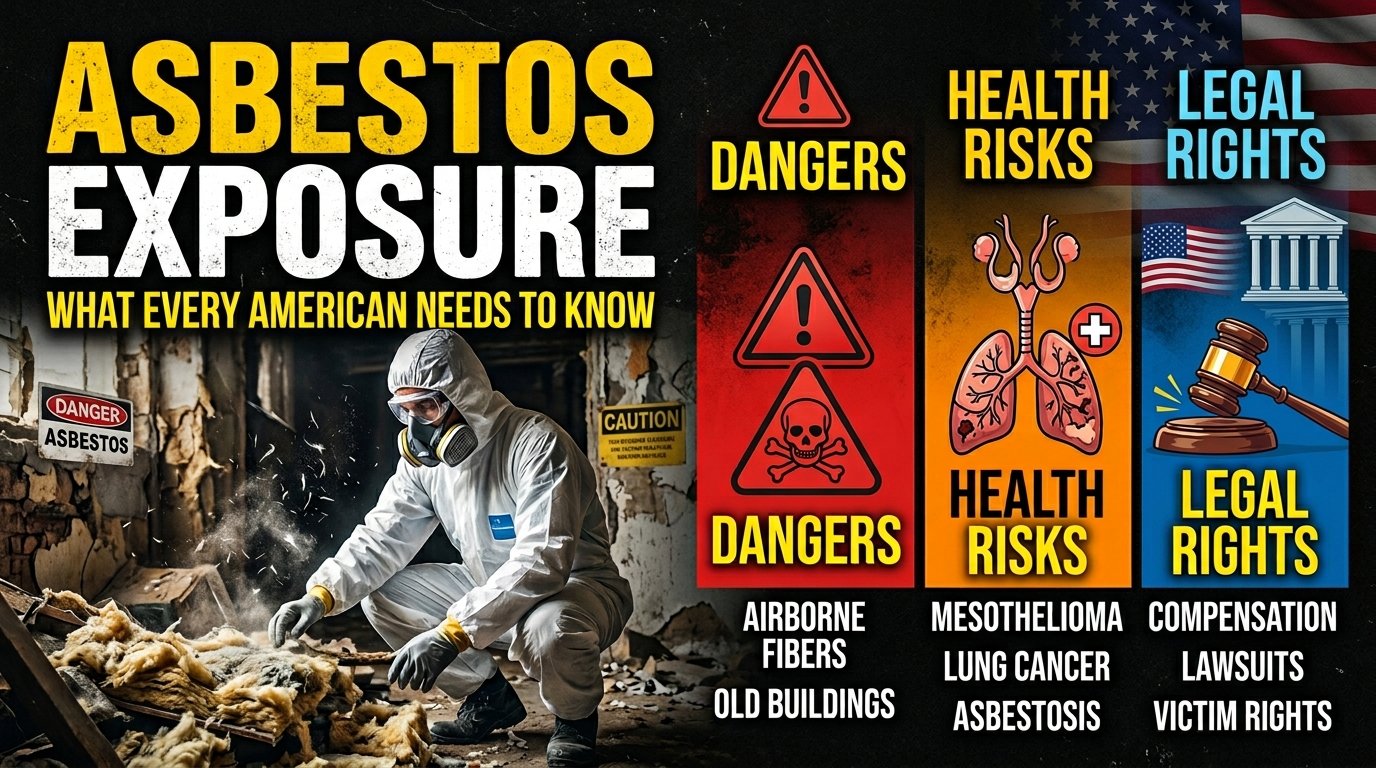
The Hidden Danger That May Be in Your Past
You worked hard all your life. You showed up every day. You did your job. You provided for your family. You never thought twice about the dust in the air or the insulation on the pipes. It was just part of the job.
Now, decades later, you are short of breath. You have a cough that will not go away. Your doctor says something about scarring on your lungs. They mention a word you never expected to hear. Asbestos.
Your first thought is confusion. You have not worked around asbestos in thirty years. How could this be happening now?
Here is the truth that most people do not know. Asbestos-related diseases take decades to develop. You can be exposed today and not get sick for twenty, thirty, or even fifty years. The asbestos fibers sit in your lungs or abdomen for years, causing damage that only shows up much later in life.
This guide is for you. You will learn what asbestos is, where it was used, what diseases it causes, what symptoms to watch for, how doctors diagnose these conditions, what treatment options are available, and most importantly, how to get financial help if you have been exposed.
No complicated language. No fear-mongering. Just clear, honest information to help you protect your health and your future.
What Is Asbestos?
Asbestos is a group of minerals that occur naturally in the environment. Unlike other minerals that form solid rocks, asbestos forms into long, thin fibers. These fibers are incredibly strong. They are resistant to heat, fire, and chemicals. They do not conduct electricity.
For thousands of years, people knew asbestos was useful. But it was in the late 1800s and early 1900s that companies started using it on a massive scale. They put asbestos in thousands of products. Why? Because it was cheap, it worked, and it made products safer from fire.
But there was a deadly problem. When asbestos products are disturbed, the tiny fibers break loose and float into the air. You cannot see them. You cannot smell them. You do not know you are breathing them in. Those fibers get stuck in your lungs or stomach. Your body cannot break them down. Your body cannot get rid of them.
They sit there for years, causing inflammation and scarring. Over time, that damage can lead to serious diseases, including cancer.

Where Was Asbestos Used?
Asbestos was used in so many products and industries that it is almost impossible to list them all. But here are the most common places where people were exposed.
Shipyards
This is one of the most common sources of asbestos exposure. Ships built before the 1980s were filled with asbestos. It was used in engine rooms, boiler rooms, pipes, valves, gaskets, packing materials, insulation, and fireproofing.
Workers who built, repaired, or maintained ships were surrounded by asbestos every single day. This is why Navy veterans have such high rates of asbestos-related diseases.
Construction
Asbestos was used in thousands of building materials. Insulation, drywall, joint compound, roofing materials, siding, flooring, ceiling tiles, textured paint, and caulking all contained asbestos.
Construction workers, carpenters, electricians, plumbers, insulators, drywallers, roofers, and demolition workers were all exposed.
Industrial Facilities
Power plants, oil refineries, chemical plants, steel mills, paper mills, and factories all used asbestos for insulation and fireproofing. Workers in these facilities breathed asbestos fibers every day.
Automotive Industry
Brake pads, brake shoes, clutch plates, and gaskets all contained asbestos. Mechanics who worked on brakes and clutches were exposed to asbestos dust every day.
Military
All branches of the military used asbestos. The Navy used the most because ships were full of it. But Army, Air Force, and Marine Corps veterans were also exposed in barracks, vehicles, aircraft, and other equipment.
Schools and Public Buildings
Many schools, hospitals, and public buildings built before 1980 contain asbestos in ceilings, floors, walls, and insulation. Teachers, custodians, and maintenance workers were often exposed.
Family Members
This is the part that breaks hearts. Family members were also exposed. Asbestos fibers stuck to work clothes, shoes, and hair. When workers came home, they brought those fibers with them. Wives who shook out and washed work clothes inhaled asbestos. Children who hugged their fathers after work inhaled asbestos. This is called secondhand or take-home exposure.
If you have been exposed to asbestos, you did nothing wrong. You were just doing your job or living your life.
Asbestos-Related Diseases
Asbestos exposure can cause several serious diseases. Some are cancerous. Some are not. But all of them can be life-changing.
Mesothelioma
Mesothelioma is the cancer most closely associated with asbestos. It is a rare and aggressive cancer that affects the tissue around the lungs, abdomen, or heart.
Almost every case of mesothelioma is caused by asbestos exposure. There is no known safe level of asbestos exposure. Even small amounts can cause mesothelioma decades later.
Lung Cancer from Asbestos
Lung cancer from asbestos looks the same as lung cancer from smoking, but it is caused by asbestos fibers instead of tobacco smoke. People who were exposed to asbestos have a much higher risk of developing lung cancer.
If you were exposed to asbestos and you also smoke, your risk of lung cancer is extremely high. Smokers who were exposed to asbestos are fifty to ninety times more likely to get lung cancer than people who were not exposed and do not smoke.
Asbestosis
Asbestosis is not cancer, but it is a serious and progressive lung disease. It is caused by scarring of the lung tissue from asbestos fibers. The scars make it harder for your lungs to expand and contract. You feel short of breath. The shortness of breath gets worse over time. There is no cure for asbestosis.
Pleural Plaques and Thickening
These are non-cancerous conditions that affect the tissue around your lungs. Pleural plaques are patches of scar tissue. Pleural thickening is exactly what it sounds like. The tissue around your lungs becomes thicker and harder.
These conditions can cause chest pain and shortness of breath. They are also a sign that you have been exposed to asbestos and are at higher risk for more serious diseases.
Other Cancers
Studies have shown that asbestos exposure may also increase the risk of other cancers, including laryngeal cancer, ovarian cancer, and colorectal cancer.

Symptoms to Watch For
The symptoms of asbestos-related diseases can be vague. They can look like many other, less serious conditions. That is why these diseases are often misdiagnosed at first.
Symptoms of Pleural Mesothelioma and Lung Cancer
- Shortness of breath that gets worse over time
- Pain in your chest or under your ribcage
- A dry cough that will not go away
- Coughing up blood
- Trouble swallowing
- Hoarseness in your voice
- Swelling in your face or arms
- Unexplained weight loss
- Extreme fatigue
- Night sweats or fever
Symptoms of Peritoneal Mesothelioma
- Pain or swelling in your abdomen
- Nausea and vomiting
- Loss of appetite
- Unexplained weight loss
- Diarrhea or constipation
- Swelling in your legs
- Extreme fatigue
Symptoms of Asbestosis
- Shortness of breath, especially with activity
- A dry, crackling sound in your lungs when you breathe
- A persistent dry cough
- Chest tightness or pain
- Clubbing of your fingers and toes (widening and rounding)
If you have these symptoms and you know or suspect you were exposed to asbestos, tell your doctor immediately. Do not let them dismiss your concerns. You have the right to be tested.
How Doctors Diagnose Asbestos-Related Diseases
Getting the right diagnosis is the first step toward getting the right treatment.
Tell Your Doctor About Your Exposure History
This is the most important thing you can do. Tell your doctor about every job you ever had. Every place you ever worked. Any time you might have been around asbestos. Even if it was decades ago. Even if you are not sure. This information helps your doctor know what to look for.
Imaging Scans
The first tests are usually scans. A chest X-ray can show fluid around your lungs, scarring, or thickening of the tissue. A CT scan gives a much more detailed picture. It can show small tumors or early scarring that an X-ray might miss.
Pulmonary Function Tests
These tests measure how well your lungs are working. You breathe into a machine that measures how much air you can take in and how quickly you can blow it out.
Biopsy
A biopsy is the only way to know for sure if you have cancer. A doctor takes a small piece of tissue from the suspicious area. A pathologist looks at it under a microscope. If cancer cells are present, the pathologist can tell what type of cancer it is.
Treatment Options
Treatment depends on which disease you have and how advanced it is. Here is a brief overview. For more details, see our other guides.
For Mesothelioma
Treatment options include surgery, chemotherapy, radiation, immunotherapy, and HIPEC for peritoneal mesothelioma. New treatments are being developed all the time.
For Lung Cancer
Treatment options include surgery, chemotherapy, radiation, targeted therapy, and immunotherapy.
For Asbestosis
There is no cure for asbestosis. Treatment focuses on managing symptoms and preventing the disease from getting worse. This includes oxygen therapy, pulmonary rehabilitation, medications to thin secretions and open airways, and treating infections quickly.
Your Legal Rights
If you have been diagnosed with an asbestos-related disease, you may be entitled to significant financial compensation.
Companies that made and sold asbestos products knew about the dangers for decades. They had secret internal documents proving they knew that asbestos caused cancer and lung disease. They hid those documents. They kept selling asbestos. They did not warn workers or the public.
That is negligence. That is wrongful conduct. And the law says they must pay for the harm they caused.
Types of Compensation Available
Lawsuits: You can sue the companies that exposed you to asbestos. Most asbestos lawsuits settle out of court. The average settlement is between one million and two million dollars for mesothelioma cases.
Asbestos bankruptcy trusts: Many asbestos companies went bankrupt because of all the lawsuits. When they went bankrupt, they were required by law to set aside money in trust funds for victims. There are over sixty of these trusts. They hold more than thirty billion dollars. Your lawyer can file claims with multiple trusts.
VA benefits for veterans: If you are a veteran, you may be eligible for monthly disability compensation and free health care from the Department of Veterans Affairs.
Workers’ compensation: If you were exposed at work, you might be able to file a workers’ compensation claim. But these benefits are usually much smaller than what you can get from a lawsuit or trust fund.
Finding an Asbestos Attorney
You need a lawyer who specializes in asbestos cases. Do not hire a general personal injury lawyer. Asbestos cases are complicated. You need someone who does this work every day.
The best asbestos attorney will:
- Give you a free consultation
- Work on contingency (you pay nothing upfront)
- Have handled hundreds or thousands of asbestos cases
- Have a track record of large settlements and verdicts
- Be willing to travel to you
Do not worry about finding a lawyer in your city. Asbestos attorneys work with clients all over the country. They can handle everything by phone, mail, and email.
How Much Does an Asbestos Attorney Cost?
Nothing upfront. Asbestos attorneys work on contingency. That means they take a percentage of the money they win for you. If they do not win anything, you pay nothing.
How Long Do You Have to File a Claim?
Every state has a deadline for filing a lawsuit. This is called the statute of limitations. The deadline is usually one to four years from the date you were diagnosed or from the date your loved one passed away.
If you miss the deadline, you lose your right to get compensation forever. That is why you need to call a lawyer as soon as possible. Do not wait.
What Is an Asbestos Trust Fund?
Asbestos trust funds were created because many asbestos companies went bankrupt. When a company goes bankrupt because of asbestos lawsuits, a court requires them to set aside money for current and future victims. The money goes into a trust fund.
Each trust fund has its own rules for how much money you can get and what you need to prove. Your lawyer can file claims with multiple trusts. You do not need to prove which company caused your illness. You just need to show that you were exposed to that company’s products.
There are over sixty asbestos trust funds. They hold more than thirty billion dollars. That money is sitting there waiting for people like you.
What If You Have Been Exposed But Are Not Sick Yet?
If you know you were exposed to asbestos but you do not have any symptoms, what should you do?
First, see your doctor. Tell them about your exposure. They may want to do baseline tests. These tests will give them something to compare to in the future if you develop symptoms.
Second, get regular check-ups. Asbestos-related diseases take decades to develop. Regular monitoring can catch problems early when they are most treatable.
Third, if you smoke, quit. Smoking makes asbestos-related diseases much worse. Smokers who were exposed to asbestos are fifty to ninety times more likely to get lung cancer than non-smokers who were not exposed.
Fourth, know the symptoms. If you develop shortness of breath, a persistent cough, chest pain, or other symptoms, see your doctor immediately.
What If Your Loved One Already Passed Away?
You can still file a claim. This is called a wrongful death claim. The money goes to the spouse, children, or other dependents.
Do not wait. There are deadlines for wrongful death claims too. Call a lawyer as soon as possible.
Frequently Asked Questions
How much asbestos exposure is dangerous?
There is no known safe level of asbestos exposure. Even small amounts can cause disease decades later.
How long does it take for asbestos diseases to develop?
Asbestos-related diseases usually take twenty to fifty years to develop after exposure.
Can one-time exposure cause mesothelioma?
Yes. There are documented cases of people who developed mesothelioma after just one significant exposure.
Do I need to know exactly where I was exposed?
No. Your lawyer can help figure it out based on your work history and other information.
What if the company that exposed me is out of business?
Many asbestos companies are out of business, but they were required to set up trust funds before they went bankrupt. Your lawyer can file claims with those trusts.
Can I still file a claim if I smoked?
Yes. Smoking does not prevent you from getting compensation. However, if you have lung cancer, the amount you receive may be reduced if you were a smoker.
Hope for the Future
Learning that you have been exposed to asbestos is frightening. Learning that you have an asbestos-related disease is devastating. But you are not without options.
There are treatments that can help. There are doctors who specialize in these diseases. There is money available to help you pay for your care and support your family.
You did nothing wrong. You were just doing your job or living your life. The companies that made and sold asbestos products are the ones at fault. And the law says they must pay.
Do not wait. See a doctor. Call an asbestos attorney today. Get the help you need. Get the money you deserve.
You are not alone. There are doctors, lawyers, support groups, and other patients ready to help you. Reach out. Make the call. Take the first step.
Disclaimer: This article provides general information about asbestos exposure, asbestos-related diseases, and legal rights. It does not constitute medical advice or legal advice. Every case is different. Always consult with qualified medical professionals and attorneys about your specific situation. If you believe you have been exposed to asbestos, see a doctor immediately. If you have been diagnosed with an asbestos-related disease, contact a qualified asbestos attorney to understand your legal rights.