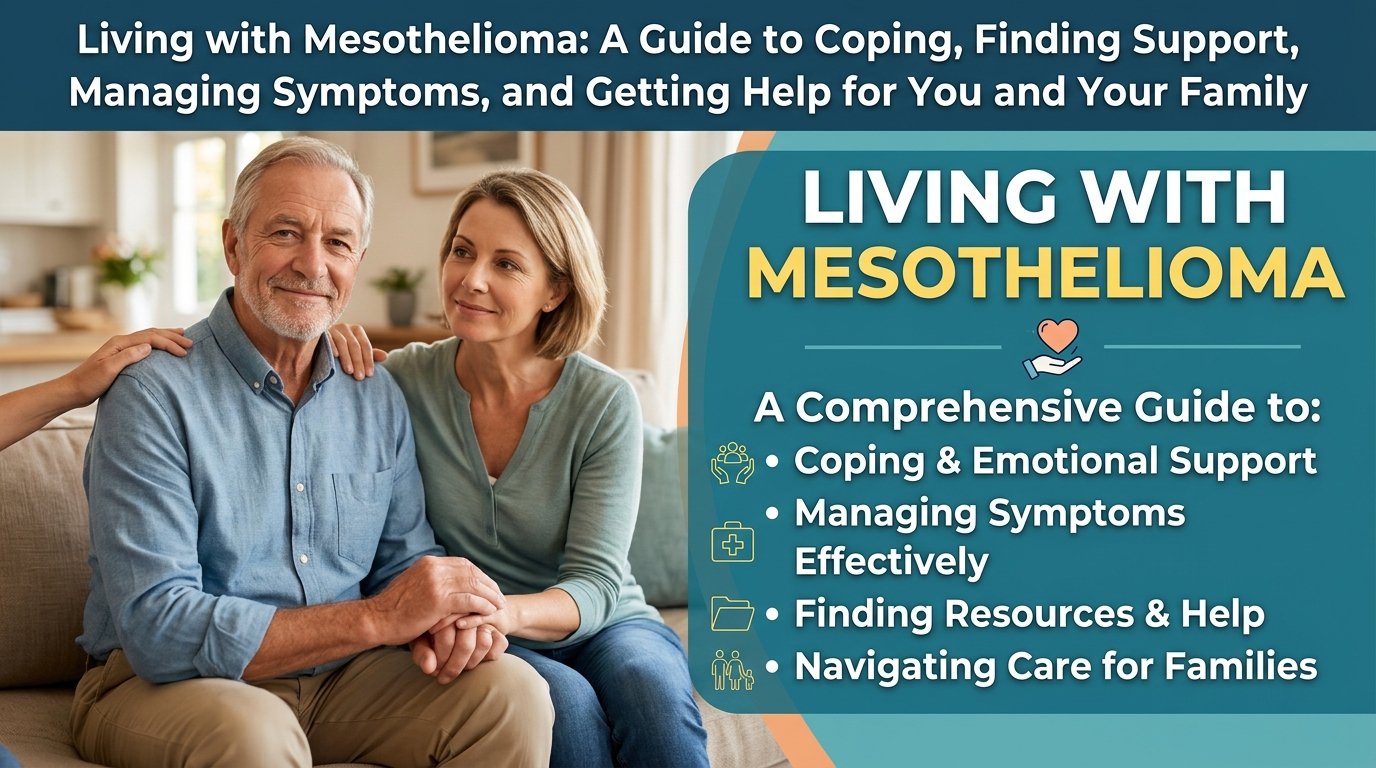
More Than Just Medical Treatment
You have been diagnosed with mesothelioma. You are learning about surgery, chemotherapy, radiation, and immunotherapy. You are talking to lawyers about trust funds and lawsuits. You are fighting for your life.
But there is more to living with mesothelioma than just medical treatment. There is the fear. The sadness. The anger. The worry about your family. The physical symptoms that make each day harder than the last. The exhaustion of appointments, treatments, and insurance calls.
You need more than a doctor. You need support. You need resources. You need help coping with the emotional and practical challenges of this disease.
This guide is for you. You will learn how to cope with the emotional roller coaster of a mesothelioma diagnosis, how to manage physical symptoms like pain and shortness of breath, how to find support groups and counseling, how to be a good caregiver without burning out, how to get financial help for non-medical needs, and how to talk to your children about your diagnosis.
No complicated medical language. No pretending everything is fine. Just honest, practical guidance to help you and your family live as well as possible with this disease.
The Emotional Journey of a Mesothelioma Diagnosis
A mesothelioma diagnosis is devastating. It brings a wave of emotions that can feel overwhelming. These emotions are normal. You are not weak for feeling them.
Shock and Denial
When you first hear the word “mesothelioma,” your mind goes blank. You cannot believe it. Maybe the doctor made a mistake. Maybe the lab mixed up the samples. You look for any reason to believe this is not happening.
Denial is not bad. It is your mind’s way of protecting you from too much pain at once. But at some point, you need to move forward. You need to accept the diagnosis so you can start treatment and make the most of the time you have.
Fear and Anxiety
Fear is constant. Fear of treatment. Fear of pain. Fear of dying. Fear of leaving your family behind. Fear of the unknown.
Anxiety shows up as racing thoughts, trouble sleeping, restlessness, and physical symptoms like a racing heart or tight chest.
What helps: Talk about your fears. Do not keep them inside. Tell your spouse, a friend, a counselor, or a support group. You will find that other people have the same fears. That makes the fears feel smaller.
Anger
Anger is very common in mesothelioma patients. You have every right to be angry. Companies knew asbestos was dangerous. They hid the truth. You worked hard. You served your country. You did everything right. And now you have cancer because of their greed.
What helps: Use your anger as fuel. Let it push you to file a lawsuit or trust fund claim. Let it push you to fight for your life. But do not let anger consume you. At some point, you need to find peace.
Sadness and Grief
You are grieving. You are grieving the life you thought you would have. The retirement you planned. The grandchildren you might not see grow up. The trips you will never take.
Grief comes in waves. Some days you feel okay. Other days you cannot stop crying. Both are normal.
What helps: Let yourself grieve. Do not try to be strong all the time. Cry when you need to cry. Talk about what you are losing. Grief is not something to get through. It is something to carry with you.
Hope
Hope is also part of the emotional journey. New treatments are being developed all the time. Immunotherapy is helping some patients live for years. Clinical trials offer options that did not exist five years ago.
What helps: Focus on what you can control. You can control your treatment decisions. You can control how you spend your time. You can control who you surround yourself with. Do not waste energy on what you cannot control.

Coping Strategies for Mesothelioma Patients
Here are practical ways to cope with the emotional challenges of mesothelioma.
Talk to Someone
You do not have to do this alone. Talk to your spouse, a family member, a close friend, a clergy member, or a counselor. Saying your fears out loud makes them smaller.
Join a Support Group
Support groups bring together people who understand exactly what you are going through. You can share your experiences. You can learn from others who have been where you are. You can give and receive hope.
The Mesothelioma Applied Research Foundation (curemeso.org) offers online and in-person support groups. The Cancer Support Community (cancersupportcommunity.org) also offers support groups for cancer patients.
See a Counselor
A professional counselor can help you work through your emotions. Many cancer centers have social workers or psychologists on staff. They are trained to help people with serious illnesses.
Ask your doctor for a referral to a counselor who works with cancer patients.
Practice Relaxation Techniques
Relaxation techniques can help reduce anxiety and improve your quality of life.
Deep breathing: Breathe in slowly for four seconds. Hold for four seconds. Breathe out slowly for four seconds. Repeat.
Guided imagery: Close your eyes. Imagine a peaceful place. A beach. A forest. A mountain. Imagine yourself there. Focus on the details. The sounds. The smells. The feeling.
Gentle exercise: Walking, stretching, and yoga can help reduce stress and improve your mood. Ask your doctor what is safe for you.
Keep a Journal
Writing down your thoughts and feelings can help you process them. You do not need to write much. Just a few sentences a day. Write about what you are grateful for. Write about what you are afraid of. Write about what you want to remember.
Stay Connected to What Matters
Do not let cancer take everything from you. Continue doing the things you love as much as you can. Spend time with people who matter. Watch your favorite movies. Listen to your favorite music. Eat your favorite foods.
Managing Physical Symptoms
Mesothelioma and its treatments can cause many physical symptoms. Here is how to manage the most common ones.
Shortness of Breath
Shortness of breath is the most common symptom of pleural mesothelioma. Fluid builds up around the lung. The tumor presses on the lung. Your lung cannot expand fully.
What helps:
- Sit upright. Do not lie flat.
- Use a fan or open a window. Moving air can help you feel less short of breath.
- Practice pursed-lip breathing. Breathe in through your nose. Breathe out slowly through pursed lips, like you are blowing out a candle.
- Ask your doctor about oxygen therapy. Portable oxygen can help you stay active.
- Ask your doctor about a procedure to drain fluid from around your lung. This is called thoracentesis. It can provide immediate relief.
Pain
Mesothelioma can cause pain in your chest, abdomen, or back. The pain can come from the tumor pressing on nerves or from treatments like surgery.
What helps:
- Take pain medication as prescribed. Do not wait until the pain is severe. It is easier to prevent pain than to stop it once it starts.
- Talk to a pain specialist. Palliative care doctors are experts in managing pain.
- Try non-medication approaches like heat packs, cold packs, massage, or relaxation techniques.
Fatigue
Extreme tiredness is one of the most common side effects of mesothelioma and its treatments. This is not normal tiredness that goes away with sleep. It is bone-deep exhaustion.
What helps:
- Rest when you need to. Listen to your body.
- Save your energy for what matters most.
- Ask for help with tasks that tire you out.
- Eat well. Good nutrition gives you energy.
- Stay as active as you can. Gentle exercise can actually reduce fatigue.
Loss of Appetite and Weight Loss
Many mesothelioma patients lose weight. You may not feel hungry. Food may taste different. You may feel sick to your stomach.
What helps:
- Eat small, frequent meals instead of three large ones.
- Eat whatever sounds good. This is not the time to worry about healthy eating. Get calories any way you can.
- Ask for help from a nutritionist. Your cancer center probably has one.
- Ask your doctor about medications that can increase your appetite.

Palliative Care: Relief from Symptoms
Palliative care is medical care that focuses on relieving symptoms and improving quality of life. It is not the same as hospice. You can receive palliative care at any stage of your illness, even while you are receiving aggressive treatment.
What Palliative Care Provides
- Expert management of pain, shortness of breath, nausea, and other symptoms
- Emotional and spiritual support for you and your family
- Help with difficult medical decisions
- Coordination of care between your doctors
How to Get Palliative Care
Ask your doctor for a referral to a palliative care specialist. Many cancer centers have palliative care teams. You can also receive palliative care at home.
Palliative care is covered by Medicare, Medicaid, and most private insurance plans.
Supporting Your Family and Caregiver
Mesothelioma does not just affect you. It affects everyone who loves you. Your spouse, your children, your parents, your friends. They are scared too. They want to help, but they may not know how.
How Family Members Can Help
- Go to appointments. Two sets of ears are better than one.
- Take notes. Write down what the doctor says.
- Make phone calls. Call the insurance company. Call the lawyer. Call the pharmacy.
- Help with daily tasks. Cooking, cleaning, shopping, driving.
- Just be there. Sometimes the best thing you can do is sit quietly with someone.
What Patients Need from Family
- Ask me what I need. Do not assume you know.
- Let me be honest about how I feel. I do not need you to fix it. I need you to hear it.
- Give me space when I need it.
- Be patient. I am not myself right now.
Caregiver Burnout is Real
If you are a caregiver, you are at risk of burnout. Caregiver burnout happens when you give so much of yourself that you have nothing left. You feel exhausted, irritable, hopeless, and trapped.
Signs of caregiver burnout:
- Feeling tired all the time, even after sleeping
- Getting sick more often
- Losing interest in things you used to enjoy
- Feeling irritable or angry with the person you are caring for
- Having trouble sleeping
- Feeling hopeless
How to prevent burnout:
- Take breaks. It is okay to leave the house. It is okay to see a movie. It is okay to have lunch with a friend.
- Ask for help. Other family members and friends want to help. Let them.
- Join a caregiver support group. You need people who understand.
- See a counselor. Your mental health matters too.
- Remember that you cannot pour from an empty cup. You need to take care of yourself to take care of your loved one.
Talking to Children About Your Diagnosis
If you have children, you are probably wondering what to tell them. Here is honest advice.
Do Not Hide the Truth
Children know when something is wrong. They hear whispered conversations. They see you crying. They feel the tension. If you do not tell them the truth, they will imagine things that are worse than reality.
Be Honest but Age-Appropriate
- Young children (under 8): “Daddy has a sickness in his chest. The doctors are giving him medicine to help him get better. Sometimes the medicine makes him very tired. He still loves you very much.”
- Older children (8-12): “I have a kind of cancer called mesothelioma. The doctors are treating it. The treatments can be hard. I want you to know that nothing you did caused this. It is not contagious. You can ask me any questions.”
- Teenagers: Teens can handle more information. Be direct. Tell them the truth about your prognosis. They will appreciate your honesty. Let them know it is okay to be sad, angry, or scared. Encourage them to talk to a counselor or join a support group for teens with a sick parent.
Reassure Them
Children often blame themselves when a parent is sick. They think something they did or said caused the cancer. Tell them clearly: “This is not your fault. Nothing you did caused this.”
Also reassure them that they will be taken care of. If you are worried about who will care for them if you die, make a plan. Tell them the plan. Knowing there is a plan can reduce their anxiety.
Financial Help for Non-Medical Needs
Asbestos trust funds and lawsuits can help with medical bills and lost wages. But there are other sources of help for day-to-day needs.
Travel and Lodging
If you need to travel for treatment, organizations can help.
- American Cancer Society Hope Lodge: Free lodging for cancer patients receiving treatment away from home.
- Mercy Medical Angels: Free or discounted air travel for medical treatment.
- Corporate Angel Network: Free flights on corporate jets for cancer patients.
Help with Household Expenses
- CancerCare: Provides limited financial assistance for transportation, childcare, and home care.
- Patient Advocate Foundation: Helps with insurance issues and provides financial aid for some patients.
- Local organizations: Many local religious organizations, community groups, and charities offer help with rent, utilities, and groceries.
Help with Medications
- Patient assistance programs: Most drug companies offer free or low-cost medications to patients who cannot afford them.
- GoodRx: A free service that finds the lowest prices for prescription drugs at pharmacies near you.
Hospice Care: When Treatment Is No Longer Working
At some point, you and your doctors may decide that aggressive treatment is no longer helping. That does not mean giving up. It means shifting the goal from curing the disease to maximizing comfort and quality of life.
What Hospice Provides
- Pain and symptom management
- Emotional and spiritual support for you and your family
- Help with daily tasks like bathing and dressing
- Respite care to give your family caregivers a break
- Grief support for your family after you die
When to Start Hospice
Hospice is for people who have a life expectancy of six months or less. But starting hospice does not mean you will die in six months. Some people live much longer on hospice.
Many patients wait too long to start hospice. They miss out on months of comfort and support. Talk to your doctor about when hospice might be right for you.
Hospice Is Not Giving Up
Choosing hospice is not giving up. It is choosing to focus on what matters most. Comfort. Dignity. Time with family. Freedom from pain.
Frequently Asked Questions
How do I find a mesothelioma support group?
Contact the Mesothelioma Applied Research Foundation (curemeso.org). They have online and in-person support groups. The Cancer Support Community also has support groups for cancer patients.
What is palliative care?
Palliative care is medical care that focuses on relieving symptoms and improving quality of life. It is not just for end of life. You can have palliative care at any stage of your illness.
How do I talk to my children about my diagnosis?
Be honest but age-appropriate. Reassure them that it is not their fault. Tell them they will be taken care of. Encourage them to ask questions.
How can I find financial help for travel and lodging?
Contact the American Cancer Society (1-800-227-2345) for information about Hope Lodge. Contact Mercy Medical Angels for help with air travel.
What if I am a caregiver and I feel overwhelmed?
You are not alone. Caregiver burnout is very common. Take breaks. Ask for help. Join a caregiver support group. See a counselor.
When should I start hospice?
Talk to your doctor about hospice when aggressive treatment is no longer helping. Do not wait too long. Hospice can provide months of comfort and support.
Hope and Peace
Living with mesothelioma is hard. There is no pretending otherwise. You face pain, fear, grief, and uncertainty every day.
But you also have opportunities that you did not have before. Opportunities to say I love you. Opportunities to forgive. Opportunities to let go of things that do not matter. Opportunities to focus on what truly matters.
You do not have to do this alone. There are support groups, counselors, palliative care specialists, and hospice teams ready to help you. There are resources to help with travel, lodging, and household expenses.
And there is hope. Hope that new treatments will help you live longer. Hope that you will have good days ahead. Hope that your family will be okay. Hope that your life mattered.
Because it did. Your life mattered. Your work mattered. Your service mattered. Your love mattered.
Now let others help you. Reach out. Ask for support. You deserve it.
Disclaimer: This article provides general information about coping with mesothelioma, symptom management, and support resources. It does not constitute medical advice or mental health advice. Every patient’s situation is different. Always consult with qualified medical professionals about your specific symptoms and treatment needs. If you or a loved one has been diagnosed with mesothelioma, speak with a doctor immediately and consider seeking support from a counselor or support group.